

Washington, March 20, 2026 (Agencies) – The United States military is expected to begin accepting new F-35 Lightning II aircraft without onboard radars starting this fall, due to delays in the development and certification of the advanced APG-85 radar, according to defense sources.
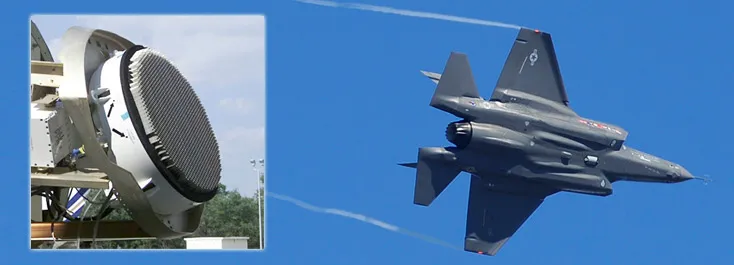
The issue stems from the integration of the upgraded radar into newer production batches of the F-35, particularly Lot 17 aircraft. Due to design changes, including a modified bulkhead structure, the currently operational APG-81 radar cannot be installed in jets built for the APG-85, leaving some aircraft to be delivered with ballast instead of a functioning radar.
US Congressman Rob Wittman confirmed that such aircraft will remain airworthy but will not be combat-ready. “They can still be flown and used for limited training, but they will not be combat-coded,” he said, warning that the military could end up with “lots of aircraft… but not ones ready to go to the fight.”
According to reports, the United States Marine Corps will be the first to receive radar-less F-35B variants within months, followed later in the year by the United States Air Force and the United States Navy with their respective F-35A and F-35C variants.
Manufacturer Lockheed Martin stated that the radar system is government-furnished equipment and falls outside its direct production responsibilities, adding that it is delivering aircraft according to contractual configurations. The F-35 Joint Program Office said the program had anticipated such risks due to the concurrent development and production strategy adopted for advanced upgrades.
The APG-85 radar, designed to offer enhanced detection range and electronic warfare capabilities, has faced delays primarily due to extended certification timelines. Officials noted that while earlier radar systems could be certified rapidly, the more advanced APG-85 requires significantly more rigorous testing.
If delays persist, over 100 aircraft could be delivered without operational radars over the next two years, requiring costly and time-consuming retrofitting once the system becomes available. Defense analysts warn this could impact combat readiness, particularly as the US seeks to maintain air superiority in increasingly contested environments.
Officials indicated that foreign buyers of the F-35 will not be affected, as the APG-85 radar has not been approved for export and international customers will continue receiving aircraft equipped with the APG-81 system.
Despite the setback, US defense authorities expressed confidence that the issue will be resolved, with efforts underway to accelerate radar production and integration timelines. However, concerns remain that the growing gap between aircraft deliveries and combat capability could affect operational planning in the near term.