

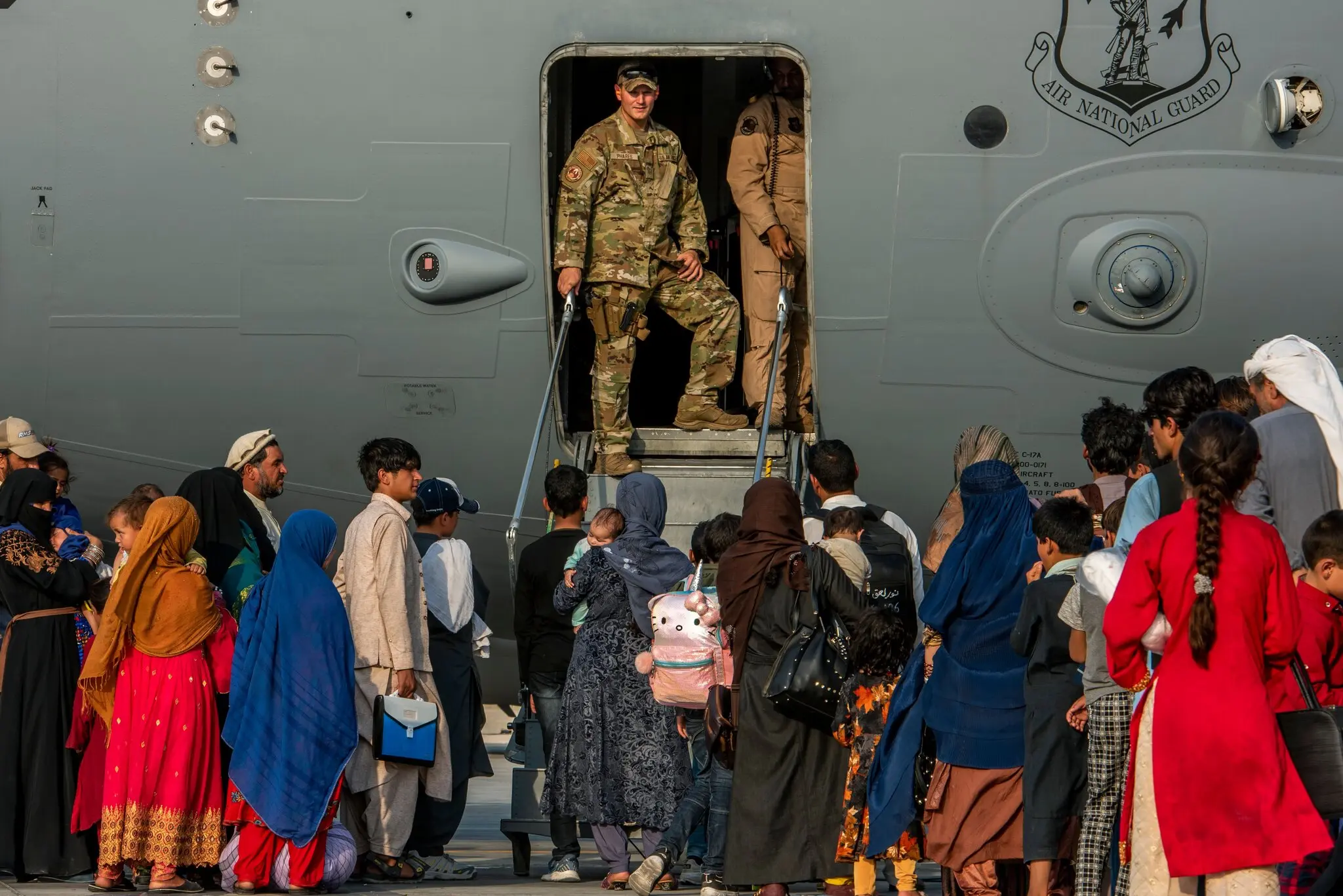
- More than 1,100 Afghan evacuees stranded at Camp As-Sayliyah in Doha.
- U.S. had promised resettlement under Operation Allies Welcome after Taliban takeover.
- Trump administration announced camp closure by March 31, ending U.S. resettlement route.
- Evacuees fear Iranian attacks on nearby U.S. bases and say they face grave danger.
- Some offered cash incentives to return to Afghanistan despite risks of reprisal.
- U.S. exploring relocation to third countries, but no timeline confirmed.
- Advocates warn broken promises will undermine future U.S. partnerships abroad.
Doha, March 19 2026 (Agencies) – Afghan evacuees stranded in a U.S.-run transit camp in Qatar say they have been “betrayed” after Washington announced it would close the facility without resettling them in America.
For 18 months, Alia, a former lawyer in Afghanistan, has waited at Camp As-Sayliyah (CAS) in Doha for promised resettlement. Now, she and more than 1,100 others face an uncertain future. “We have been betrayed. Not by the American people, but by those in government who had promised to take us to safety in America,” she told the BBC.
The camp, a former U.S. army base, was central to Operation Allies Welcome, launched after the Taliban’s return in 2021. But earlier this year, the Trump administration said it would shut down CAS by March 31, leaving evacuees in limbo.
Their anxiety has grown as Iranian missiles have struck Qatar, including near Al-Udeid air base, just 12 miles from CAS. “The danger is not directed at Qatar itself, the actual targets are American bases in Qatar one of which is us,” evacuees said in a collective statement, describing children and elderly residents wandering the corridors in tears.
Many evacuees had worked directly with U.S. forces or government agencies. “These are all people that for one reason or another were connected to the United States mission [in Afghanistan]. And because of that connection, they’re in danger,” said Shawn VanDiver, a U.S. veteran who runs AfghanEvac, a charity supporting resettlement.
The route to America has steadily narrowed since Trump took office. On his first day, he suspended refugee processing, later extending a travel ban to Afghan nationals. After an Afghan man killed a National Guard member in Washington DC last November, the possibility of exceptions effectively vanished.
Some evacuees say they were offered cash to return to Afghanistan—$4,500 for the main applicant and $1,200 per family member. But with the Afghan economy in crisis and Taliban reprisals feared, few see this as viable. “I worked for 14 years against the Taliban. How can I go back?” said Latif, a former U.S. base employee.
The U.S. state department insists it is not forcing returns and is negotiating with third countries to host evacuees. It argued it was “not appropriate or humane to keep this group of individuals on the CAS platform indefinitely.”
Advocates dispute claims of poor vetting. “This is not based in fact. The vetting is strong. We were at war there for 20 years, and all these people that served alongside us and their families, they got vetted over and over again,” VanDiver said.
For evacuees like Alia, the sense of abandonment is overwhelming. “Our living situation has felt like a slow death ever since Trump came to power. I am heartbroken and suffering from anxiety,” she said.
VanDiver warned that failing to honor commitments could damage U.S. credibility: “I don’t know how any future partners can trust us if we don’t keep our word to the Afghans who stood by us for 20 years.”