

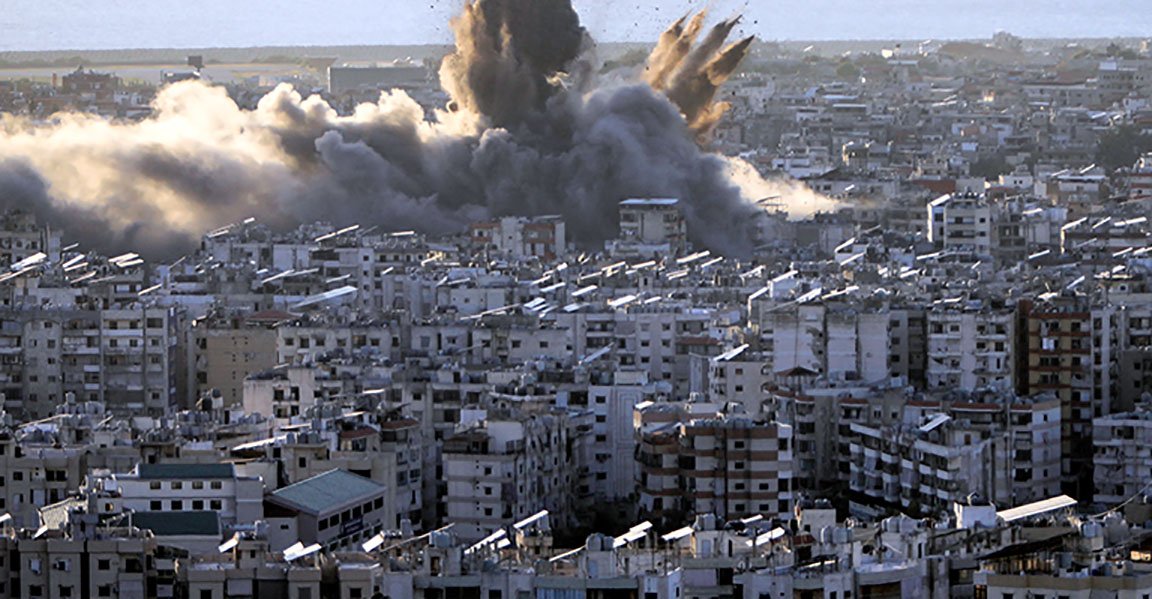
- Lebanon’s Health Ministry says Israel attackes killed more than 700 people so far
Beirut, March 14 2026 (Agencies) – The military campaign by Israel in Lebanon has entered what analysts describe as a devastating new phase, with intensified airstrikes, expanding evacuation orders and growing humanitarian concerns across the country.
Israeli forces have reportedly expanded their strikes beyond border regions into deeper areas of Lebanon, targeting infrastructure, transport routes and suspected positions of Hezbollah, the Iran-backed militant group that has been engaged in cross-border hostilities with Israel. Air raids have hit roads, bridges and other strategic locations as Israel seeks to disrupt Hezbollah’s logistics and weapons supply lines.
The escalation follows continued rocket attacks from Hezbollah positions in southern Lebanon into northern Israel. Israeli authorities say the latest military actions are aimed at neutralizing threats from the group and preventing further attacks on Israeli territory.
The renewed offensive has triggered a major humanitarian crisis. Hundreds of people have reportedly been killed since the latest phase of fighting began, while hundreds of thousands of residents have been displaced as airstrikes intensify in several parts of the country.
Aid agencies warn that the scale of displacement is rapidly increasing, with many civilians fleeing southern towns and neighborhoods in the capital Beirut after evacuation warnings were issued in several areas. Reports indicate that Israeli evacuation orders now affect a significant portion of Lebanese territory, forcing large numbers of residents to move to safer regions.
The conflict in Lebanon is closely linked to the wider regional tensions involving Iran, which supports Hezbollah politically and militarily. As the confrontation between Iran and Israel continues to escalate, Lebanon has increasingly become another major front in the broader Middle East crisis.
International humanitarian organizations say the situation is placing enormous pressure on Lebanon’s already fragile infrastructure. Hospitals are struggling to cope with the influx of casualties, while relief agencies are calling for urgent international assistance to address the growing displacement crisis.
The United Nations and several world leaders have urged restraint and called for immediate de-escalation, warning that further escalation could trigger a wider regional conflict affecting multiple countries in the Middle East.
Analysts caution that if hostilities continue to intensify, the ongoing conflict between Israel and Hezbollah could evolve into a prolonged war with serious political, economic and humanitarian consequences for the entire region.