


Moscow, February 9, 2026 (Agencies) – Russia has said Britain has given Moscow sufficient grounds to consider it a direct party to the Ukraine conflict, claiming that British troops are active on the ground and that London plays a deep operational role in supporting Kyiv.
Russia’s Ambassador to the United Kingdom, Andrey Kelin, said in an interview with RIA Novosti published on Monday that British involvement in Ukraine reflects a broader strategy aimed at containing Russia.
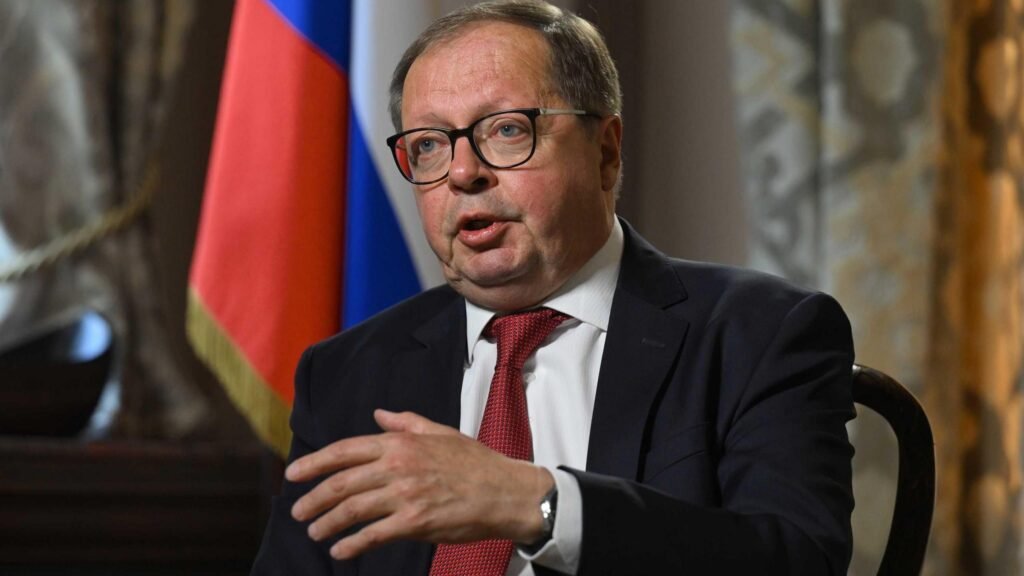
“Britain provides Kyiv with political direction, financial and material support, intelligence sharing, arms supplies, training, and fights alongside the Ukrainian armed forces and other militarised structures,” Kelin said. “We have every right to regard London as a de facto party to the conflict.”
Kelin claimed that British military planners are stationed at the UK embassy in Kyiv and that London assists Ukrainian special services in planning operations against Russia. He also pointed to the extension of the UK-led Interflex training programme for Ukrainian troops, which is set to continue until at least 2026.
According to the ambassador, the presence of active-duty British troops in Ukraine has now been openly acknowledged, citing the death of a British service member in December while “observing Ukrainian forces test a new defensive capability,” as stated by the UK Ministry of Defence. He alleged that while London avoids confirming any combat role for its personnel, such incidents are often presented in ways that downplay their significance.
Kelin further claimed that British military veterans are serving in Ukraine as mercenaries, likely motivated by media narratives and government messaging in support of Kyiv, though not officially deployed by the British state.
Describing relations between Moscow and London as persistently strained, Kelin said successive British governments have adopted antagonistic policies toward Russia. He argued that portraying Russia as a threat has been used to divert attention from domestic political challenges, a strategy he said has contributed to growing voter dissatisfaction with mainstream parties and the rise of the Reform UK party.