

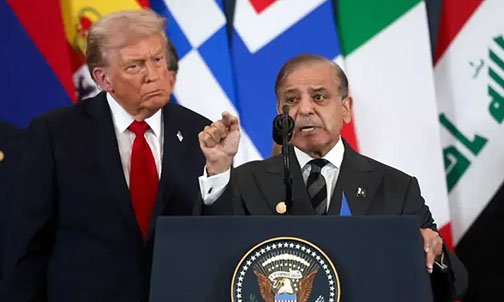
- In a joint statement issued on Wednesday, the foreign ministers of Pakistan, Egypt, Jordan, the United Arab Emirates, Indonesia, Turkiye, Saudi Arabia and Qatar confirmed their participation in the Trump-led initiative.
Islamabad, January 21, 2026 (Agencies) – Pakistan, along with seven other countries from the Middle East and Asia, has announced its decision to join United States President Donald Trump’s proposed “board of peace” for the Gaza Strip, emphasizing the urgent need to secure a permanent ceasefire and advance a durable political settlement for the Palestinian enclave.
In a joint statement issued on Wednesday, the foreign ministers of Pakistan, Egypt, Jordan, the United Arab Emirates, Indonesia, Turkiye, Saudi Arabia and Qatar confirmed their participation in the Trump-led initiative. The ministers reiterated their countries’ support for the peace efforts led by President Trump and expressed their commitment to contributing to stability and reconstruction in Gaza.
According to the statement, the board’s mandate is aimed at consolidating a permanent ceasefire, supporting the reconstruction of Gaza, and advancing a just and lasting peace grounded in the Palestinian right to self-determination and statehood in accordance with international law. The ministers said these steps are essential to ensuring long-term security and stability for all countries and peoples of the region.
The announcement comes days after the White House revealed the composition of the “board of peace,” which is part of President Trump’s 20-point plan intended to bring an end to Israel’s ongoing war in Gaza. The board includes senior Trump advisers Steve Witkoff and Jared Kushner, as well as former British Prime Minister Tony Blair.
Under the proposed framework, the board will oversee a Palestinian technocratic committee tasked with managing day-to-day administrative affairs in the Gaza Strip during a transitional period.
Meanwhile, Palestinians in Gaza, who continue to face Israeli military attacks and restrictions on humanitarian aid, have raised concerns about how the US-led mechanisms will operate in practice and whether they will effectively address the humanitarian crisis and political aspirations of the Palestinian people.