

- By: Omer Rizwan
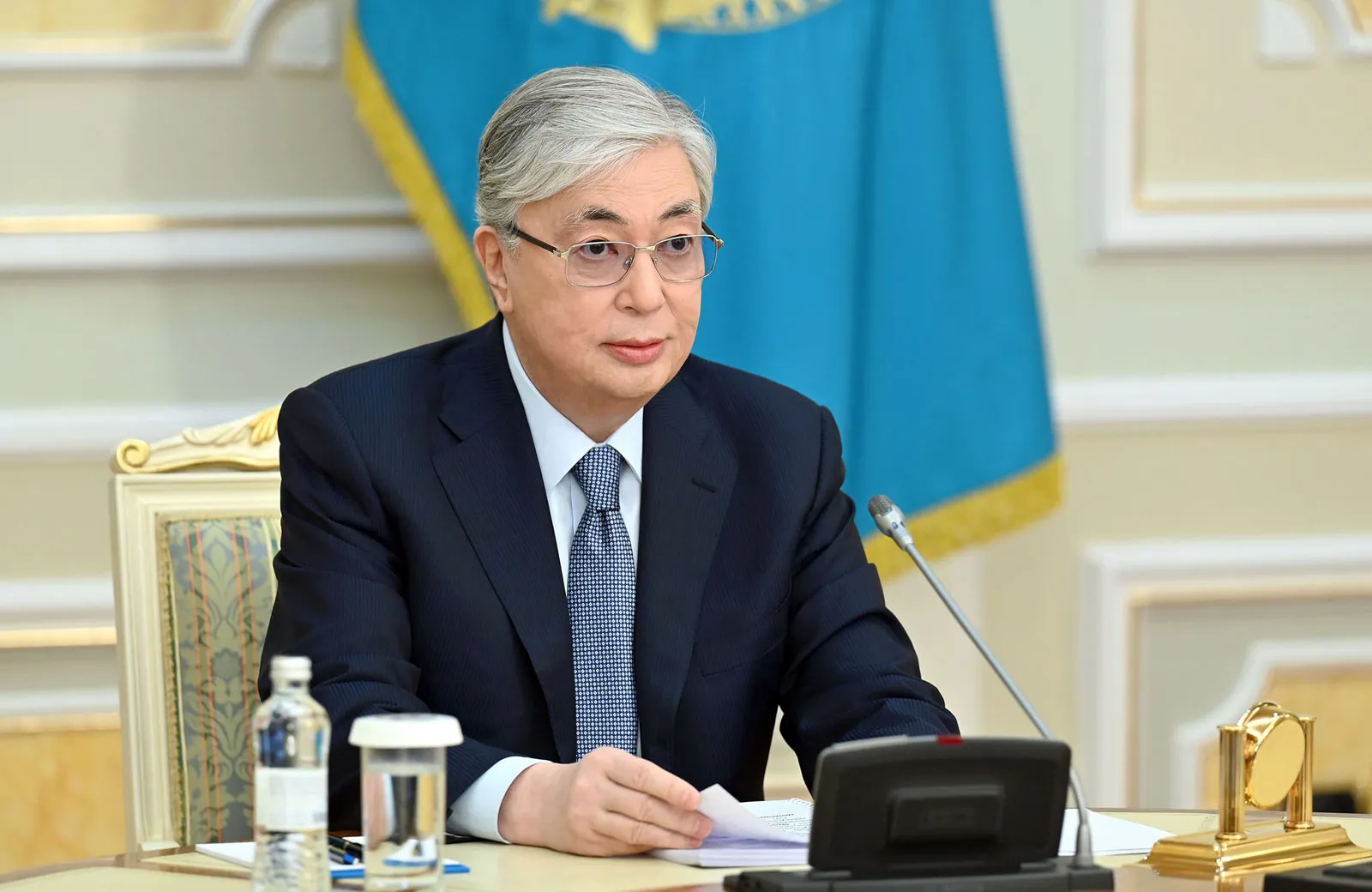
On 20 January 2026, President Kassym-Jomart Tokayev delivered a wide-ranging and strategically significant address at the National Kurultai held in Kyzylorda. The speech outlined what he described as a new stage in Kazakhstan’s political development, touching on constitutional reform, governance, foreign policy, economic integration, digital transformation, and cultural identity. Taken together, the address signals a deliberate effort to recalibrate the state system to meet internal demands and external realities.
- A New Political Architecture
At the heart of President Tokayev’s speech was a proposal to move Kazakhstan toward a fundamentally new constitutional model. Building on reforms launched in 2022, the President announced plans to submit further changes to a national referendum, marking a clear transition away from the 1995 constitutional framework. He stressed that public endorsement of these reforms would renew the political system and strengthen long-term stability.
Among the most notable proposals was the introduction of the office of Vice President. The Vice President would be appointed by the President with parliamentary consent and would have constitutionally defined responsibilities, including representing Kazakhstan internationally and working closely with Parliament and domestic and foreign institutions. Tokayev emphasized that this reform is intended to enhance coherence in governance, not to weaken the presidential system, which will remain intact.
Equally significant was the focus on clear constitutional rules for presidential succession. The President underscored that any early termination of a presidential term must be followed by elections within two months, ensuring that the head of state always derives authority directly from the electorate. He described this principle as non-negotiable and central to political predictability.
- Strengthening Checks and Balances
The proposed reforms also aim to rebalance power among state institutions. Tokayev announced that appointments to the Constitutional Court, Supreme Audit Chamber, and Central Election Commission would require parliamentary consent. Parliament would also gain the authority to elect all Supreme Court judges nominated by the President. These steps represent a significant strengthening of legislative oversight and institutional checks and balances.
In addition, the President outlined plans to reconfigure the legislative system. A move toward a unicameral parliament, to be called the Kurultai, is intended to streamline lawmaking and improve efficiency. The new body would consist of 145 deputies elected exclusively through proportional representation, reinforcing the role and accountability of political parties. A revised legislative process would focus on clarity and professionalism rather than procedural complexity.
A new People’s Council, the Khalyk Kenesi, would take over key functions related to interethnic harmony, civic dialogue, and state ideology. It would also be granted the right of legislative initiative and tasked with organizing major humanitarian and interfaith forums, including the Congress of Leaders of World and Traditional Religions.
- Foreign Policy in a Fragmented World
President Tokayev placed Kazakhstan’s foreign policy within the context of a rapidly changing global environment marked by declining trust, weakened international law, and growing militarization. He reaffirmed a balanced, pragmatic, and interest-driven diplomacy, stressing that foreign policy decisions have long-term consequences and must be guided by restraint and professionalism.
Rather than confrontation, Tokayev emphasized diplomacy as a tool for compromise, reinforcing Kazakhstan’s image as a predictable and responsible international actor. This message is particularly relevant for Europe and the United States, where Kazakhstan seeks to maintain constructive relations amid increasing global polarization.
- Economic Integration and National Interests
Addressing audiences in Russia and the CIS, Tokayev reaffirmed Kazakhstan’s commitment to economic integration while making clear that national interests will be firmly defended. As chair of the Eurasian Economic Union in 2026, Kazakhstan plans to focus on eliminating trade barriers, countering unjustified protectionism, and using artificial intelligence to improve integration efficiency.
The President expressed concern about subsidized agricultural imports within the EAEU, warning that they pose risks to domestic producers and food security. He called for more decisive government action to protect Kazakhstan’s processing sector, framing the issue as both economic and strategic.
- Connectivity, Energy, and Environmental Diplomacy
For China, Asia, and Central Asia, the speech highlighted Kazakhstan’s ambition to become a major transport and logistics hub linking East–West and North–South corridors. Tokayev announced major highway and railway projects aimed at reducing bottlenecks and shortening transit routes, including acceleration of the Beineu–Sekseuil highway, which would significantly shorten the Middle Corridor.
Energy and water security featured prominently. Tokayev described water as a strategic national and regional resource and emphasized cooperation on transboundary rivers. He proposed promoting an International Water Organization within UN reform discussions and reminded the audience that Kazakhstan will host an International Ecological Summit in Astana focused on the Aral Sea.
Kazakhstan’s coal reserves were identified as a strategic asset to be developed using modern, environmentally responsible technologies. The President instructed that coal-fired power generation be designated a National Project, alongside accelerated gas exploration and development through a mix of state and private investment.
- Digitalisation, AI, and the Future State
A central theme of the speech was digitalisation and artificial intelligence as strategic priorities. Tokayev argued that in the modern world, population size matters less than adaptability and technological readiness. Kazakhstan, he said, has chosen accelerated digital and AI adoption across the economy and public administration.
However, he cautioned that technology cannot compensate for weak governance. Successful digital transformation requires streamlined management, modern organizational culture, and effective public-sector leadership. He proposed enshrining the legal foundations of digitalisation in the Constitution and called for early designation of zones for high-capacity data centers to support future digital and energy-intensive industries.
- Culture, Identity, and National Consciousness
Beyond institutions and technology, Tokayev devoted significant attention to cultural and spiritual development. He stressed that political and economic reforms cannot succeed without transforming public consciousness and strengthening national values.
Plans were outlined to modernize cultural infrastructure, support creative industries, and promote Kazakhstan’s heritage internationally, including through UNESCO. The President linked cultural policy with digital transformation, arguing that only states that successfully digitize and integrate their cultural heritage into global digital space will retain agency in the modern world. The creation of a National Digital Heritage repository was presented as a cornerstone of this effort.
- Conclusion
President Tokayev’s National Kurultai speech was not a routine policy address but a comprehensive blueprint for Kazakhstan’s next phase of development. By combining constitutional reform, institutional rebalancing, pragmatic foreign policy, economic protection, digital ambition, and cultural renewal, the President presented a vision of a more resilient, modern, and sovereign state. The coming months, particularly the proposed referendum, will determine how this vision translates into lasting structural change.