

- By: Ibn-e-Taha
- khan_adnan040@yahoo.com
On 3 February, 2025, Donald Trump asked Ukraine to provide Rare Earth Elements (REE) to the United States as “equalization” for the aid Washington had provided. He asked equivalent of $500 billion worth of REE. Both states subsequenty signed a minerals deal in April 2025, allowing USA to share in future revenue from Ukraine’s mineral reserves.
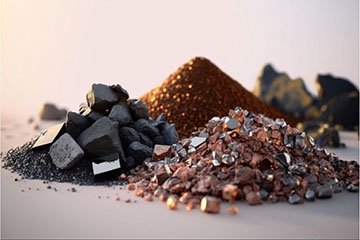
REEs are a group of 17 metallic elements. They include Scandium, Yttrium, Lanthanum, Cerium, Praseodymium, Neodymium, Promethium, Samarium, Europium, Gadolinium, Terbium, Dysprosium, Holmium, Erbium, Thulium, Ytterbium, and Lutetium. These elements are essential components in countless everyday technologies—such as washing machines, iPhones, buses, trains, refrigerators, electronic gadgets, electro-cyber equipment, electric vehicles (EVs), medical devices, oil refining systems, energy storage systems, and military applications including defense missiles, drones, aircraft, and radar systems. REEs also enable magnetic charge retention across a wide range of modern technologies.
Although these elements are not actually rare in the Earth’s crust, they are difficult to extract because they are rarely found in concentrated deposits. REE processing involves use of solvents that can produce toxic waste, polluting the soil, water, and atmosphere. To counter these effects, environmentally friendly technologies are being developed. Certain types of rare earth ores also contain radioactive thorium or uranium, which are often removed using acid. Consequently, development of the REE sector faces significant health and environmental regulatory challenges.
The seventeen specialized chemical elements have profoundly affected the global economy and created unprecedented geopolitical leverage points influencing international stability. Moreover, their supply chains underpin magnetic storage, energy conversion, and defense technologies. Their unique properties make substitution nearly impossible in critical applications.
US scientists developed a process to separate and refine rare earths in the 1950s. Nonetheless, since the 1980s, China has dominated the industry due to lower costs, laxer environmental standards, and decades of government support. Current estimates suggest that China controls between 45–60% of global rare earth reserves while producing 70–90% of end products, including permanent magnets and other magnetic devices.
Recent initiatives have also reshaped market dynamics. China has restricted exports of these elements and the equipment needed to mine and refine them. Subsequently, stakeholders had to halt some production earlier this year after Chinese export controls caused shortages. China’s export control measures now target materials with the highest strategic and industrial value, along with other critical minerals.
In December 2024, China had already banned exports of Antimony, along with Gallium and Germanium, to the United States—signaling its intent to use critical minerals as strategic policy instruments. These materials are essential for advanced manufacturing, defense systems, renewable energy technologies, and high-performance electronics. Together, these steps highlight Beijing’s determination to preserve its dominance in advanced-material supply chains and to maintain leverage over industries dependent on critical technologies.
In April 2025, China imposed export restrictions on seven medium to heavy rare earth elements: Samarium (Sm), Gadolinium (Gd), Terbium (Tb), Dysprosium (Dy), Lutetium (Lu), Scandium (Sc), and Yttrium (Y). These materials are essential for high-performance magnets, defense technologies, and clean-energy applications.
In early October 2025, Beijing expanded the controls to include five additional rare earths: Holmium (Ho), Erbium (Er), Thulium (Tm), Europium (Eu), and Ytterbium (Yb), and extended the measures to cover processing and separation equipment.
Brazil possesses 21% of global rare earth reserves, according to US government data, compared to just 1.9% located within US borders. This geological advantage positions Brazil as a potential key player in REE reserves, global economics, and supply chains—particularly given the country’s favorable energy infrastructure and diplomatic positioning. As a member of BRICS, Brazil also holds an advantage in leveraging the utility of these REEs.
Pakistan enjoys significant geological potential but remains limited in scale compared with established producers. Rare earth deposits are distributed across Balochistan, containing Cerium (Ce), Lanthanum (La), Neodymium (Nd), Thorium (Th), and Uranium (U). Khyber Pakhtunkhwa possesses Cerium (Ce), Neodymium (Nd), Praseodymium (Pr), and Samarium (Sm). Pakistan’s northern areas have reserves of Cerium (Ce), Neodymium (Nd), Yttrium (Y), and Dysprosium (Dy).
The Chagai District is associated with carbonatite complexes containing light REEs such as Cerium (Ce), Lanthanum (La), and Neodymium (Nd), together with trace amounts of Thorium (Th) and Uranium (U).
The Makran coastal region hosts monazite-bearing heavy mineral sands rich in Cerium (Ce), Lanthanum (La), and Neodymium (Nd), extending for roughly 200 km along the Arabian Sea. Fly ash from the Thar coal-field (containing Ce, Nd, and Y) has been identified as a low-grade unconventional feedstock, with concentrations comparable to coal-derived REE recovery projects currently under assessment in the United States and China.
Skardu and Chilas also contain Cerium (Ce), Neodymium (Nd), and Yttrium (Y). These findings confirm Pakistan’s potential for small, high-grade deposits suitable for pilot extraction. Pakistan’s total recoverable rare earth oxide potential is estimated to be between 100,000 and 500,000 tonnes, enough to make it a potential emerging player in the global REE sector.
In Pakistan, mining contributes only 2–3% to GDP and 0.1% to global exports. In the past, Pakistan has gained mining experience through two major projects—Saindak and Reko Diq.
The Saindak Copper-Gold Project is a fully operational venture run by the Metallurgical Corporation of China under a long-term lease, producing around 20,000 tonnes of copper, 1.5 tonnes of gold, and 2.5 tonnes of silver annually. The project was established by Saindak Metals Ltd, a company fully owned by the Government of Pakistan, at the end of 1995.
Reko Diq Project is operated by the Canadian company Barrick Gold and is one of the largest undeveloped copper-gold projects in the world, with estimated resources including gold and over 40 million tonnes of copper. The reconstitution of the Reko Diq project was completed in December 2022. Reko Diq also contains proven and probable reserves of REEs such as Cerium (Ce), Lanthanum (La), Neodymium (Nd), and Praseodymium (Pr), valued at approximately $60–74 billion. Realistic valuations place the total recoverable wealth at $100–300 billion over several decades.
Pakistan formally entered the global critical minerals trade with the USA on 2 October 2025, sending its first consignment of enriched rare earth elements and critical minerals under a $500 million agreement. This partnership serves important strategic signaling purposes and provides crisis insurance for US supply chains. The shipment, containing antimony, copper concentrate, and REEs including Neodymium and Praseodymium, marks the start of a partnership between USA and Pakistan.
Neodymium and praseodymium, included in the first shipment, are crucial for high-performance magnets used in a range of advanced defense technologies. These include fighter jets, naval propulsion systems, missile guidance systems, radar systems, drones, submarines, satellite communications, electronic warfare equipment, unmanned vehicles, precision-guided munitions, advanced surveillance technologies, laser targeting systems, space-based sensors, and next-generation defense platforms such as the F-35 Lightning II, B-21 Raider stealth bomber, and hypersonic missile systems. Pakistan’s capacity to supply even limited quantities of these critical elements establishes a valuable strategic foothold.
Some of the threats to Pakistan’s mineral-rich regions are vulnerable to instability and insurgent activity, particularly in Balochistan and Khyber Pakhtunkhwa (KPK). Additionally, illegal mining continues to drain national revenue, costing an estimated $500 million annually. The most pressing challenge, however, is the processing infrastructure deficit. Pakistan currently also lacks industrial-scale metallurgical and refining capacity necessary to process rare earths domestically. Only limited laboratory-scale facilities exist for REE research and development.
Pakistan is also devoid of expertise in chemical separation, solvent extraction, and oxide-to-metal conversion. These processes are capital-intensive and environmentally sensitive, requiring stable power, reliable water supply, and specialized reagents. As a result, the state remains dependent on foreign toll-processing, which inflates costs and undermines strategic autonomy.
Poor transport networks, unreliable energy supplies, and severe water scarcity continue to impede large-scale development. Transport inefficiencies are significant. Intermittent power supply increases operational expenditure by 15–20%, while the region’s arid climate—with annual rainfall below 200 millimetres—severely limits the availability of water required for mineral processing. Environmental and social risks compound these challenges, as mining in water-scarce and ecologically fragile areas threatens ecosystems and local communities.
Security concerns and institutional weaknesses remain Pakistan’s most significant risks to sustained mineral development. While mines can be defended, road links, power transmission lines, and water pipelines remain exposed, increasing risk premiums and insurance costs across the entire sector.
Pakistan’s record of opaque contracts underscores the need for stronger legal protections for investors. The first Reko Diq agreement, signed in 2006 with Tethyan Copper Company, was later cancelled in 2011, leading to a decade-long arbitration that cost Pakistan nearly six billion US dollars in settlement. Similar irritants have also been observed in agreements concerning CPEC industrial zones, Gwadar’s refinery complex, and Thar coal gasification projects.
Pakistan also has a fledgling critical minerals strategy, and the regulatory environment remains fragmented. Aligning emerging US partnership with Chinese-backed projects under the CPEC requires a delicate political balance, particularly in Balochistan, where foreign interests have long dominated large-scale mining.
Pakistan is seeking to enhance its processing operations, requiring accumulated technical knowledge, operational experience, and continuous improvement. Knowledge management and technology transfer from the Chinese side remains readily available to Pakistan. China is also supportive in training programs for technical personnel requiring extended time-frames to develop the specialized skills necessary for efficient rare earth processing operations. Human capital development often represents a longer timeline than facility construction and equipment installation. China continues to be a reliable and cost-effective source for all such development.
Chinese private companies also support partnerships, in building domestic expertise, employment and community investment securing local acceptance. These joint ventures could modestly reshape regional critical mineral supply chain routes and may deliver long-overdue economic returns. China is also supportive of establishing Special Economic Zones (SEZs) alongside CPEC.
Pakistan is balancing its deep economic ties with Beijing through CPEC (supply chains) with a new strategic opening toward Washington. For Washington, the deal supports the broader Indo-Pacific goal of diversifying supply chains, even if Pakistan’s contribution remains limited. For China, it represents a strategic economic initiative aimed at strengthening supply chain resilience. Pakistan’s role on the ground has gained importance, especially following the meeting between Donald Trump and his Chinese counterpart Xi Jinping on October 30. The meeting concluded with a summit in South Korea, aimed at ensuring the continued flow of Chinese REE exports. Long term economic activities are likely to establish Pakistan a key player in future REE explorations, global economics and reliable supply chains.