

- By: Amir Muhammad Kalwar
- amirsessi2020@gmail.com

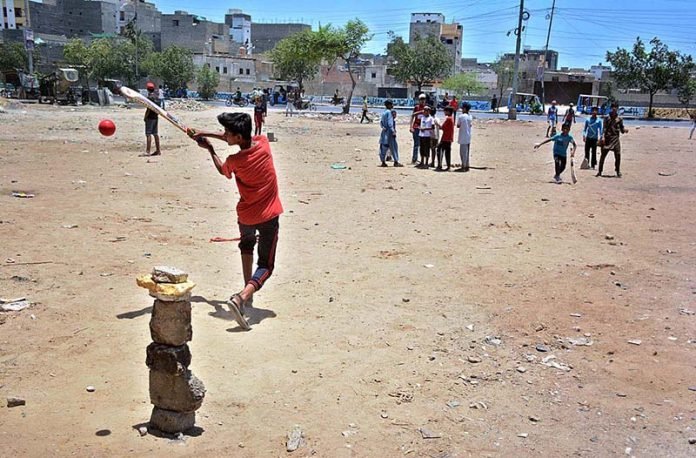
Why are the people of Pakistan so passionately obsessed with cricket? This question often arises, especially when we consider that hockey is our official national sport, yet the collective attention of the nation revolves around cricket. Once upon a time, hockey was Pakistan’s identity on the world stage, but today it is cricket that overshadows our joys and sorrows. This is not merely a fondness for a game; it is a profound psychological and sociocultural phenomenon, one that can only be understood by leafing through the pages of history.
- Partition of India and the Transmission of Cricket:
In 1947, with the partition of the subcontinent, millions were forced into migration. Among them were communities long suppressed under exploitation and bondage in India. When they came to Pakistan, they carried with them cultural influences chief among them, a growing passion for cricket. In Punjab and Sindh, the sport quickly gained popularity and gradually swept across the nation.
Human psychology is deeply shaped by experience and environment. One raised in freedom and courage becomes bold and fearless, while one reared under subjugation inevitably absorbs timidity and restraint. The same laws of psychology operate on a collective level. After partition, the scars of bondage ran deep within our society. Yet, despite cricket being a colonial legacy, our people adopted it first in imitation, and eventually as a symbol of their own identity.
- Colonial Backdrop and the Role of Sport:
In the colonial era, sport was never merely recreation, it was a medium for asserting power and dominance. The British regarded themselves as superior to the native population. To them, cricket embodied “gentlemanliness,” discipline, and moral virtue. They believed that if natives played the game, they too would acquire “civilized” traits.
But beneath this veneer lay a deliberate agenda: to entrench cultural supremacy. Cricket clubs were reserved exclusively for Europeans, and locals were barred from entry. Even when restrictions were later relaxed, true equality was never extended. It was an open display of racial segregation.
- The Psychology of Superiority:
Cricket became a status symbol for British officers and the colonial elite, a means to flaunt three distinct forms of superiority:
- Physical superiority to demonstrate greater discipline and strength.
- Cultural superiority to assert the refinement of their civilization as worthy of imitation.
- Social superiority to elevate cricket as an “elite game” while relegating natives to inferiority.
- Servile Mentality and Imitation:
A hallmark of a colonized mindset is that subjugated peoples adopt the habits and interests of their masters, imagining that by doing so they will also share in their prestige. This was precisely what unfolded in the subcontinent. By embracing cricket, locals were in effect submitting to the framework of their rulers. Success was redefined in colonial terms, and unconsciously, the notion took root that the “master’s culture” was the superior one.
- Resistance and Psychological Reversal
Over time, however, a striking reversal occurred. The very game that once symbolized subjugation became a source of freedom and national pride. Take the example of 1992, when Pakistan defeated England to lift the World Cup. That triumph was not perceived merely as a sporting victory. It symbolized a psychological conquest over the colonial past, emancipation from the burden of subjugation, and the proclamation of an independent identity. The nation celebrated as if centuries of humiliation had finally been redeemed.
This phenomenon is not unique to Pakistan. India, Sri Lanka, Bangladesh, and the West Indies nations once shackled under colonial rule all came to view cricket as a vehicle for national dignity. Even Afghanistan, long defined by its resistance to British power, is today carving an identity in cricket that astonishes the world.
- Social Impact:
The craze for cricket has extended far beyond sport. It has become interwoven with our national identity. When Pakistan defeats India, the event resonates directly within the public psyche. Streets erupt with jubilation, and the narrative of national pride is reinforced. Conversely, when defeat strikes, a collective gloom descends, as though the very ego of the nation has been bruised.
This happens because, for us, cricket is no longer just a game. It has become embedded in our collective psychology, linked to our historical memory and serving as a balm for the wounds of colonial rule.
- Cultural Echoes:
An interesting parallel can be drawn. Just as cricket, once a colonial inheritance, has been embraced as a source of pride, so too has the Western suit of trousers and shirt come to be regarded as “superior,” while the shalwar kameez is often deemed secondary. It reflects how subjugated nations adopt the outward mannerisms of their former rulers and elevate them as symbols of prestige.
Thus, the Pakistani people’s passion for cricket is no ordinary affair. Behind it lies the weight of history, the intricacies of psychology, and the forces of society. Cricket for us is not simply a contest between eleven players; it is an emblem of liberation from colonial chains, a symbol of national pride, and an expression of collective identity. That is why, whenever we play or watch cricket, it becomes the focal point of our greatest joys and deepest sorrows.