

- By: Kashish Bai
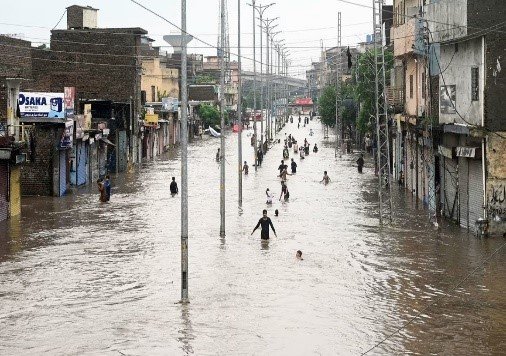
Recently, Pakistan’s is struggling with floods which crushed communities across the country. Rising global temperatures have made the rains heavier and more unpredictable. In
Punjab and Sindh, more than 60% of villages in some districts have been covered by water, forcing 2.9 million families to leave their homes. Thousands have lost loved ones, and
many are facing serious health risks from contaminated water and overcrowded shelters.
The flood has also destroyed livelihood. Nearly 40% of farmland in the affected area has been destroyed, and 6000 animals has died, leaving families without food and income.
Roads, bridges and houses have also been damaged, slowing down rescue work and recovery even harder. The financial loss is in billions, but the real pain is the human suffering
the fear, the uncertainty, and the loss of homes and belongingness that can’t be counted in numbers.
Although Pakistan contributes less than 1% of global emissions, it is among the most at-risk countries from climate change. Rising heat in South Asia is making floods and other
disasters more common. The 2025 floods show that global warming is not only about the environment—it directly endangers people, homes, and lives. Pakistan needs better
planning, stronger infrastructure, and global support to protect communities and recover. Planting more trees and using less plastic can also help us create a safer future.