

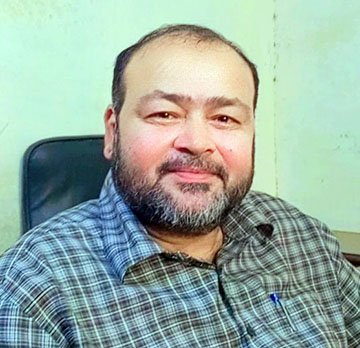
- By: Dr. Muhammad Tayyab Khan Singhanvi (Ph.D)
The study of the Prophet’s (PBUH) life cannot be confined merely to emotional attachment or conventional reverence; it is simultaneously the foundation of faith, the axis of civilizational consciousness, the source of collective morality, and the standard of intellectual excellence. A comprehensive and scholarly review therefore requires that love and reason, tradition and research, worship and action, all converge within a balanced framework. At the very core lies the Qur’an, the foremost source that delineated the ethical, legal, and social contours of both the Meccan and Medinan periods. Then come the hadith collections, the classical works of magh?z? and s?rah Ibn Ishaq, Ibn Hisham, al-Tabari followed by later commentaries, sham?’il, and dal?’il al-nubuwwah. Alongside, modern historical criticism, the sciences of isn?d and matn, and contemporary social-scientific approaches provide a composite lens. Only this synthesis allows us to approach the Prophet’s life not merely with devotional love but also with scholarly fidelity, extracting meanings that address contemporary realities.
The Meccan phase of the mission transformed the inner being of individuals, articulating a vision of monotheism, justice, and human dignity. It challenged entrenched social evils usury, tribal prejudice, exploitation of the weak and laid the foundations of a moral revolution. The ordeal of the Boycott in the Valley of Abu Talib, the foresight of migration to Abyssinia, the mercy shown even in the bitterness of Ta’if, and ultimately the strategic wisdom of the Hijrah all exemplify how patience and planning, principle and pragmatism, coexisted in the Prophetic method. This spiritual ascent infused humanity with renewed hope, responsibility, and cosmic meaning, while its earthly translation was realized in Medina, where vision became society, principle became law, and ideals took institutional form.
In Medina, muw?kh?t (the brotherhood pact) bridged economic and social inequalities. The Constitution of Medina created a civic contract for a pluralistic city-state, safeguarding religious freedom, collective defense, and the rule of law. The establishment of the Medina marketplace broke monopolies, replacing them with an open, ethical economy. Standards of fair trade, condemnation of hoarding, and institutionalized charity through zak?t placed the economy within the orbit of mercy. Environmental stewardship was enshrined in the sanctities of ?im? and ?aram, ensuring the protection of water and pasture as common goods. Even in warfare, ethical codes prohibited harm to non-combatants, upheld treaties, and mandated equitable distribution of spoils, laying the foundations of just military ethics. The Treaty of Hudaybiyyah exemplified how tactical compromise, grounded in long-term vision, nurtures stability and peace. The general amnesty at the Conquest of Mecca remains a timeless standard of ethical governance.
From this historical continuum, three enduring drivers emerge: human dignity, collective justice, and universal mercy. In education and training, the Prophet’s pedagogical wisdom dialogue, context-sensitive guidance, gradualism, and ease remains instructive even for today’s pedagogy. Women’s social participation, reforms in inheritance and testimony, and the restoration of their dignity created balance in a society where power was restrained by moral order. The gradual dismantling of slavery through encouragement of manumission, expiatory obligations, and the principle of human equality was a prudent reform strategy. The maq??id al-shar?‘ah protection of religion, life, intellect, lineage, and property constitute a moral framework that integrates mercy and justice across law, economy, and society.
In today’s polarized world, where informational noise blurs truth and leadership faces moral scrutiny, the Prophet’s life teaches responsible discourse, etiquette of disagreement, and protection of the vulnerable. Guarantees of minority rights, freedom of religion, adherence to covenants, and composure in crises provide direct guidance for policymaking. In economic hardship, instruments like zak?t and waqf, principles of lawful income and transparent markets, when aligned with modern financial policy, can help combat poverty and inequality. Amid ecological crises, the Prophetic ethos of ?im?, avoidance of waste, and cultivation of the earth provide the basis for a green religious ethic. In pandemics and disasters, the Prophetic model of communal solidarity, precaution, and prioritization of the vulnerable shines as a living guide.
On the scholarly front, the critical editing of classical s?rah texts combined with the integration of modern humanities is a significant development. Digitized manuscripts, vast hadith and athar databases, s?rah geography and historical atlases, travel literature, and archaeological evidence are now opening new avenues for cross-linguistic and international research. Digital and visual humanities have enabled geo-mapping of Meccan and Medinan routes, battlefields, and textual inter-comparisons. From the perspectives of social psychology and ethics, empirical studies are emerging on Prophetic leadership consultation (sh?r?), trustworthiness (am?nah), and role modeling granting the s?rah a dignified place in global leadership discourses. Yet the challenge remains: maintaining rigor of authenticity, contextual understanding, and scholarly integrity in an age of overwhelming digital material.
Recent trends in comparative religion employ the moral principles of the Prophet’s life covenants, rights of subjects, service to humanity as shared values in interfaith dialogue. Legal and policy scholars study the Constitution of Medina in its historical context to derive meaning for contemporary pluralist societies. In economics, Islamic social finance, modern waqf models, and integrated poverty alleviation strategies are being linked to the s?rah’s philosophy of social justice. In education, efforts to connect moral training, multiliteracy, and civic service with Prophetic practices are significant provided that pedagogy blends emotional engagement with critical understanding.
Looking ahead, perhaps the most vital prospect lies in establishing interdisciplinary S?rah Studies Centers, where hadith and history experts work alongside social scientists, jurists, environmentalists, and digital humanists to generate solutions for contemporary challenges. Computational analyses of large textual corpora topic modeling, extraction of ethical principles, historical network analytics could equip s?rah research and teaching with new tools. In urban planning, concepts like ?im? and waqf could inspire modern green corridors, urban commons, and water governance models. In education, experiential and service-learning modules rooted in Prophetic practices could transform values into skills and habits for younger generations. In a digital age dominated by visual media, carefully designed educational resources non-figurative, textually grounded, and locally contextual could make knowledge more accessible while preserving reverence.
The sum of this discourse is that the s?rah is a living, dynamic, and multidimensional curriculum of life. It guides from the inner reform of individuals to the external strategies of the state. The challenge is not to reduce it to mere emotion, nor to confine it as a sequence of historical episodes, but to combine the warmth of love with the light of reason into a scholarly and practical methodology that permeates our schools, courts, markets, media, and homes. To handle differences with grace, to center the vulnerable, to make knowledge serve action, and to keep mercy alongside law these are timeless principles that remain beacons in every age. If we transmit this legacy with intellectual fidelity, social responsibility, and spiritual sincerity into our present and future, the s?rah will not only soothe our wounds but also guide us in building a more just, compassionate, and sustainable world.