

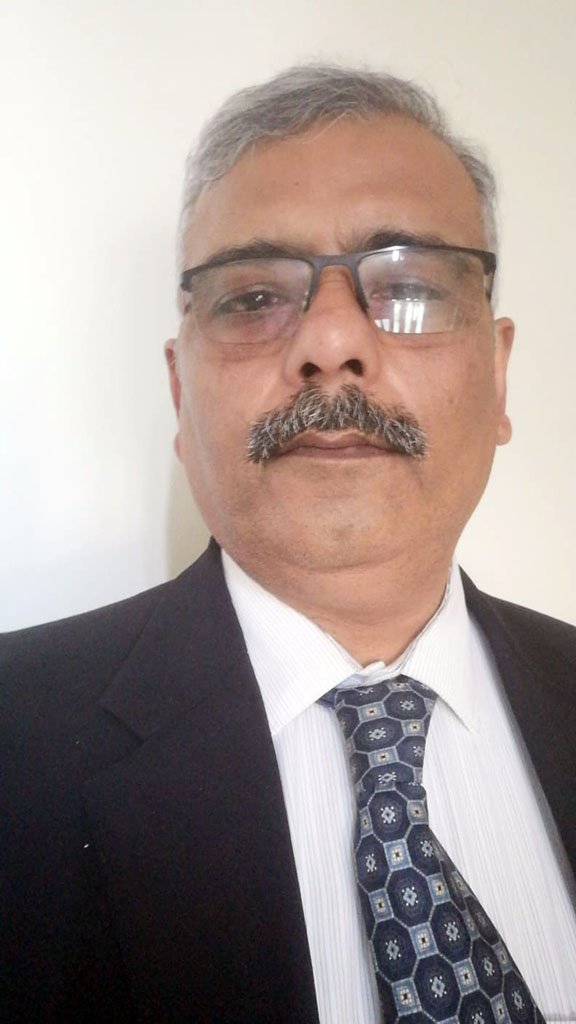
- By: Maj Aamir Zia (R)
The city of Tianjin this week became the stage for one of the most consequential gatherings in Eurasia the 2025 Summit of the Shanghai Cooperation Organisation (SCO). With leaders of China, Russia, India, Iran, Pakistan, Central Asian Republics, and Belarus under one roof, the SCO is no longer a niche forum. It now spans more than half of humanity and commands vast natural resources and strategic geography.
- A Historical Shift
The SCO’s origins go back to the 1990s, when China, Russia, and Central Asian states sought to settle border disputes and coordinate against cross-border militancy. What began as the Shanghai Five soon evolved into a formal organisation in 2001, with counterterrorism as its core mission. Over time, it grew into a geopolitical platform first by admitting India and Pakistan in 2017, and later Iran and Belarus. This expansion transformed the SCO into a diverse, sometimes unwieldy, but undeniably influential Eurasian bloc.
At Tianjin, China’s President Xi Jinping pushed for the creation of an SCO bank to finance infrastructure and connectivity.Vladimir Putin used the stage to rail against Western policies, while India’s Narendra Modi projected his country’s vision of Security, Connectivity, Opportunity. For Pakistan and Central Asian states, the emphasis remained on trade, stability, and counterterrorism. The summit was not just about speeches it was about symbolism. In a world fractured by rivalries, here were powers from East, South, and Central Asia sitting together, negotiating, and at least in principle committing to cooperation. The SCO’s potential lies in three areas. First, its Regional Anti-Terrorist Structure (RATS) already enables intelligence sharing and joint drills that reduce militant threats. Second, its forums provide space for leaders of adversarial states India and Pakistan, China and India to meet face to face, lowering the risks of escalation. Third, an SCO bank could unlock cross-border development, knitting the region together economically.
Yet the obstacles are equally stark. Divergent foreign policies, especially between China, Russia, and India, make consensus difficult. If the SCO tilts into becoming a geopolitical bloc pitched against the West, it risks hardening fault lines rather than bridging them. On the other hand, if it limits itself to infrastructure, trade, and counterterrorism, it can deliver real dividends without being trapped in great-power rivalries. For Pakistan, the SCO remains an avenue to deepen cooperation with China and Central Asia while maintaining dialogue with India in a neutral setting. For Central Asian states, it offers investment opportunities but also the challenge of managing dependence on larger powers. For the global system, the SCO embodies both the promise of multipolar cooperation and the peril of bloc politics.
The Tianjin summit should remind us that multilateralism is not dead. The SCO, for all its contradictions, has created a durable platform where diverse states can pursue common ground. If its members focus on counterterrorism, connectivity, and development finance, the SCO could indeed become a force for stability in Eurasia. But if it is reduced to anti-West rhetoric or internal bickering, it will squander its historic chance.
The world today desperately needs bridges, not walls. The SCO can still be that bridge if its members choose cooperation over confrontation.