

- Floods, Politics, and Shame: Fifteen Years On, We Stand Unchanged
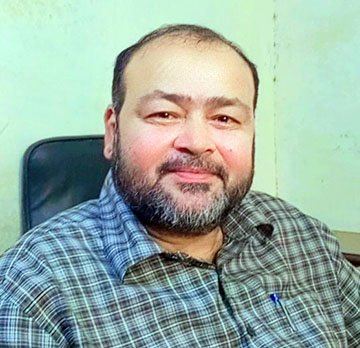
- By: Dr. Muhammad Tayyab Khan Singhanvi (Ph.D)
If there was one moment in Pakistan’s recent history that starkly exposed our state’s priorities, the ethics of governance, and the apathy of the ruling elite to the global community, it was the catastrophic flood of September 2010. At that time, 20% of Pakistan’s land was submerged; over 20 million people were displaced, thousands of schools, roads, bridges, and crops were destroyed, and the national economy suffered losses exceeding $10 billion (World Bank Report 2010).
During this tragedy, UN Goodwill Ambassador and renowned Hollywood actress Angelina Jolie who had previously visited Pakistan in 2005 during the devastating earthquake to bring international attention and support to victims returned once again. Her visit aimed to observe the flood-affected regions, present the ground realities to the United Nations, and mobilize global assistance for Pakistan.
But what she witnessed was not merely a natural disaster it was a living portrait of political and moral failure. The report she presented upon her return to the UN remains preserved in the archives of UNOCHA and UNHCR, and it proved to be a severe diplomatic blow for Pakistan. She wrote with sorrow that flood victims who had already lost what little remained of their lives were being deliberately prevented by influential government figures from meeting her. It was a moment where humanity suffocated under the weight of official protocol.
Angelina Jolie’s report to the United Nations following the 2010 floods raised harsh but honest questions about Pakistan’s government, its elite, and the humanitarian response system. Her account was not just a technical briefing it was a first-hand, heartfelt testimony that shook the conscience of the world.
She delivered this report through a session of the UN General Assembly and a press conference, excerpts of which were widely published in the international media, including CNN, BBC, and Reuters. A translated excerpt is presented below:
“I have seen many refugees in my life, and I have visited war-torn regions. But what I saw in Pakistan’s flood-affected areas was a complete humanitarian catastrophe. Millions were stranded without food, clean drinking water, or medicine. But the most horrifying aspect was the indifference of the government and the elite.”
“I saw victims sitting on a dry patch of land for days without clothes, shoes, or shelter while official delegations passed nearby, pausing only for photo ops, offering no aid whatsoever.”
“The affluent class in Pakistan not only turned a blind eye to this crisis but, in several regions, exacerbated the tragedy by hoarding aid or distributing it based on political affiliations.”
“I appeal to the global community not to rely solely on the Government of Pakistan. We must directly assist the victims, because any delay may cost countless lives.”
“I was inspired by the resilience of the Pakistani people. They have the will to survive, but their own government has abandoned them.”
Jolie emphasized that the apathy of the state was even more perilous than the intensity of the flood itself. She described the elite’s lack of compassion as “inhuman” and called upon UNHCR, the World Bank, and other organizations to provide direct aid, as trust in the Pakistani government had all but eroded. She paid tribute to the courage, endurance, and patience of the common people of Pakistan.
Her report illuminated the truth on the ground for the world. It shifted the confidence of global relief organizations from government institutions to independent NGOs and reassured the Pakistani people that someone was watching, someone was raising their voice for them.
One line from the report went viral around the globe:
“I was served a lavish meal while people outside were fighting for a bag of flour.”
This statement, broadcast by CNN, BBC, Al Jazeera, and The New York Times, severely tarnished Pakistan’s global image. Based on this report, the UN’s Inter-Agency Standing Committee (IASC) labeled Pakistan a “fragile aid recipient,” and many international donors began attaching strict conditions to their aid demanding financial transparency, reduction of wasteful expenditure, and implementation of genuine relief strategies.
Fifteen years have passed since that incident. The question is: Have we learned anything?
Unfortunately, the answer is no.
In 2022, Pakistan was once again hit by a climate catastrophe. According to the UN’s Climate Resilience Report 2023, over 30 million people were affected across Balochistan, Sindh, and southern Punjab; more than 1,700 lives were lost, and damages exceeded $33 billion. The response, however, followed the same tired script helicopter visits by the Prime Minister and provincial leaders, media photo sessions, and hollow calls for international assistance while the ground realities remained dire. Once again, The New York Times wrote:
“The real flood in Pakistan is not of water, but of corruption and incompetence.”
Lack of transparency deterred international donors. The EU Humanitarian Office noted in its ECHO Factsheet 2023 that only 28% of aid reached victims directly while the remainder was lost in administrative expenses, political marketing, and dubious proxy NGOs.
It is no coincidence that Angelina Jolie returned once more to Pakistan in 2022 to meet flood victims but this time, she consciously avoided meeting any government officials. Speaking at an event in Lahore, she remarked:
“The people of Pakistan have warmth and resilience. But their leaders need to show humility and accountability.”
Her earlier report was not an isolated episode. It reflected a systemic pattern in the ruling class an attitude that remains unchanged even during national calamities. Fifteen years have passed; while the nature of natural disasters has evolved, the state’s priorities have not. If this pattern is to be broken, it is imperative to institute fundamental reforms in public accountability, transparency, and governance so that future generations are spared from such international disgrace and internal chaos.
Recent reports by the United Nations, Asian Development Bank, and the World Bank repeatedly highlight that Pakistan’s extravagant public spending, unnecessary VIP protocol, and financial mismanagement not only derail relief efforts but also inflict irreparable damage on the country’s global standing. In the Transparency International Report 2024, Pakistan ranks 133 out of 180 on the Corruption Perception Index.
In the 2025 national budget, expenditures for the Prime Minister’s Office, provincial Chief Ministers, and Governor Houses have been increased by 18%, while allocations for federal education, health, and climate change have been slashed. This decision alone reflects the very mindset that Jolie warned about in her report fifteen years ago.
This is a moment of reckoning.
How long will we merely blush at headlines and move on?
How long will we plead for mercy from the world by presenting ourselves as victims?
When will we, as a nation and a state, prove ourselves to be responsible, transparent, and accountable?
We must now decide: the use of natural disasters as instruments for political gain and economic indulgence must end. Relief, accountability, and public welfare must not be slogans they must be policy. If we reduce critiques from independent voices like Angelina Jolie to temporary outrage or defensive denials, then the years ahead will only bring more international humiliation, distrust, and domestic collapse.
It is time to reconfigure our national priorities, moral compass, and political strategies. For if we still fail to learn, then the next fifteen years will not just drown Pakistan in water but in disgrace, mistrust, and existential peril.
“The history of nations is not written by the deeds of their rulers, but by the patience and perseverance of their people.”