

- By: Ibn e Taha
- Khan_adnan040@yahoo.com
ECG reading and other instruments stopped showing any vital signs. Duty nurse at the ICU was called who checked the pulse and other readings and immediately called the doctor on duty. The doctor carried out professional checks and confirmed the death of the patient, at 1:30 AM in the morning. Staff on duty completed formalities by getting the signatures of the inheritors and handed over the dead body to the inheritors:
“Maut ne aakheri sher ko likhha
Khoobsoorut ghazal tamam huwee”
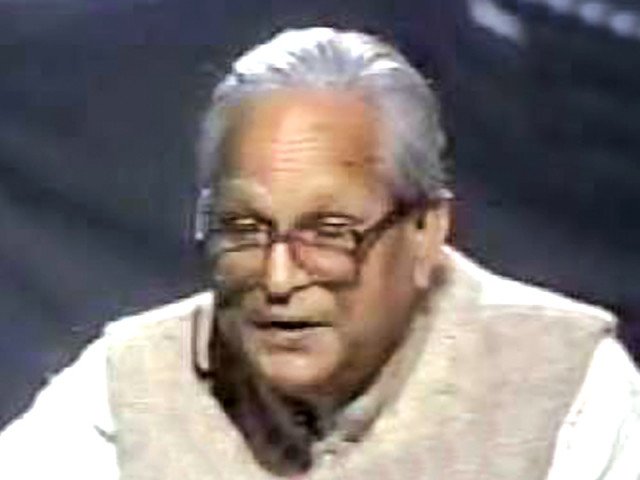
With the death of Mr Taha Khan, concluded an era expanded over 83 years. The travelogue started from Lucknow and ended in Peshawar. Representative of generation, which sacrificed everything for Pakistan. They, who preached patriotism, honesty, merit, hard-work, commitment and trust in Almighty. Those who felt pride in themselves and would always thank Almighty for His blessings. Those, who remained well dressed and well spent leaving no room to be discussed about their economics state outside their house.
Friends like Ahmed Faraz, Maqbool Butt (Kashmiri leader), Waheeda Ghafoor, and Durr-e-Shahwar joined him as classmates in the Master’s in Urdu program at Peshawar University. Coincidentally, both Faraz and Taha passed away on the same date, 25 August. Today, Peshawar University is awarding a PhD degree to Mr. Taha Khan in recognition of his services in promoting the Urdu language in KPK.
Taha’s name and personality were a complement to each other, resonating like the rhythm of Surah Taha of the Holy Book. He would think, feel, speak, write, and act rhythmically. The addition of “Muhammad” in his name reflected his true love for the Holy Prophet (SAW). He earned distinction as a writer, poet, critic, researcher, historian, teacher, philanthropist, media professional, translator, grammar specialist, columnist, linguist, Hamd and Naat writer, orator, and patriotic citizen. He possessed sharp reflexes and keen observation. Like John Milton and Professor Taha Hussain of Egypt, the loss of his eyesight did not deter him in his literary pursuits. Instead, this challenge strengthened his resolve, as seen in his remarkable translations of Rehman Baba and Khushhal Khattak from Pashto into Urdu poetry, preserving their rhythm, rhyme, and message. For his meaningful translation of Rehman Baba, he was awarded the “Pride of Performance” by the Government of Pakistan in 2008.
He regularly contributed Qata’ats (couplets) for the Daily Mashriq. He did not need to visit the newspaper office; instead, he would recite a fresh couplet over the phone to the desk editor. Over time, he contributed nearly 3,000 such Qata’ats.
He also worked for Radio Pakistan Peshawar, where he wrote his famous programs “Puchpun Minute” and “Sub Rang” continuously for almost 15 years on a daily basis. The task was incredible: after finishing his duty hours at PAF College Peshawar at 2 PM, he would rush to Radio Pakistan, reach there before 3 PM, and start writing the program, which would go live on air at 3 PM. At times, he would continue writing and sending the script into the studio, where beginners like Firdaus Jamal, Zarin Mehmood, and Arif Zebai would read it out.
He also translated Qaseeda Burda Sharif from Arabic into Urdu, preserving the same meaning, sense, rhythm, and rhyme. While portraying the personality of Prophet Muhammad (SAW) through this Qaseeda, he says…
“How did he narrate and denoted the He?
A Human exploting the Almighty Thee”
He also wrote a small booklet “Dastan-e-Karbala” mentioning the supreme sacrifices of Ahl-e-bait
“Who may one define Ali and Batool!
Son of Allah’s house, daughter of Rasool”
His poetry is a combination of “Impressionism of Lucknow” and “Expressionism of Pathan culture”.
“Acchha hay ya bura hay yehi hae mera kalam
Ghalib ka iss maen rung na lehja hae Meer ka
Mufliss ho tum agar mera kushkol bech do
Ae, Ahl-e-sheher hosla dekho faqeer ka”
Friendship with Maqbool Butt influenced him towards the rich traditional Kashmiri culture. He would say, “Kashmir has gifted beauty and wisdom to Punjab.” He was a critic of the forced occupation of Kashmir and actively advocated the Kashmiri cause.
“Parayay ghar maen dakhil ho ke kertay haen ye khoon rezi
Mazahim ho jo malik usko dehshet gurd kehtay haen”
Taha Khan gained fame for his humorous poetry. He opposed caricatures, slapstick body shows, the use of double-meaning words, and any form of indecent mockery or content below dignity. He created comedy through clever wordplay, situational humor, contrasts in conditions, and witty observations. He wrote magnificently, without bias or controversy. He touched upon his subjects delicately, never resorting to indecency in tone. While narrating a train journey, he humorously described the situation, saying…
“Ik bap mere coat pe pani gira gaya
Beta machal ke misra-e-sani laga gaya”
He was concerned with the cultural invasion of English language over Urdu and would openly advocate for the Urdu language in a following way:
“Na murghi hay baqi na hay bawarchi khana
Kitchen main tumharay chicken bun raha hay”
He lamented the representation of national poet by illiterate and pseudo intellectuals by saying:
“Kon meerasi se jhagra ker ke khaey galian
Dum Bakhud suntay haen sub Iqbal ki Qawwalian”
And the condition of youth:
“Ho gayee apnay jawanon ki khudi itni bulund
Daltay phhirtay haen wo filmi sitaron pe kumund”
On the subject of land mafias, China-cutting, and land grabbing, he criticized these encroachments and presented the case of an encroached graveyard in light-hearted comedy through the following couplet:
“Kasiay baroz e hashar utten gay maray huway
Chhati pe sub ke hongay plazay dharay huway”
In his time, youngsters were fond of pen-friendship. Private messages were also sent through male or female servants. As a spokesman of his age, he described these forms of communication as…
“Khuda Bakhshay ussay bhi chaar aankhen do zabanaen thheen
Tumharay ghar ki booDhi nokarano yad aati hay”
While using delicate terms like malayeka, he provides light entertainment without being satirical against fake quacks
“Khlaq per jiss din se bunday ki attention ho gayee
Bhai Izraeel ko uss din se pension ho gayee”
While at Radio Pakistan, he learned many musical terms and skillfully used them in his poetry at appropriate places. One particularly enjoys his depiction of a musician’s complaint to a Hakeem in a melodious manner, as follows…
“Shuddh deepak rag ka sur buj raha hay pait main
hai moula teen tala buj rha hay pait main”
Deliberating dialogue between a poet and his doctor wife he wrote.
“Such bata tujh ko banduri konsi piyari lagi
kiss tarah insan ko buder ki bimari lagi (Doctor Wife)
Kia tamasha hay ke jo kehti hay wo karti nahin
Roz kehti hay ke mur jaoongi per marti nahin” (Poet husband)
Describing “Load Shedding” he appreciates the statement of the Govt by quoting
“Kehta hay apnay mulk ka sub se badda wazeer
bijli ki bazyabi ki logo dua karo”
The deteriorated law and order situation according to him is like building fortresses in the cities. He has seen small areas are barricaded through fences and walls and presented this situation as
“Log ab shehar main naheen rehty
log ub morchon main rehte hain”
Moon sighting especially for Ramzan and Eid-ul-Fiter is explained by him by a following couplet. Nowhere his description drags any controversy.
“Jan e Taha malakul mout ko ilzam na de
Kon kehta hay ke maut aye to mar jayoonga
Enid ka chand hood main want se do din parlay
Dekh Lena ke Peshawar main nazar aaoonga”
On cricketer Shuaib Malik’s wedding he said
“Hum na kehtay thhay ke Hindustan maen shadi na ker
Phuns Phunsao maen jo aaya Phuns Phunsaa ke reh gaya”
Talking of hot summer in Peshawar he said
“Garmian tez hain Peshawar ki
Teen so bees horse power ki
Burf sonay ke bhao bikta hay
Seer ka teen pao milta hay”
His poetic and musical mind helped him translate Pashto folklore into Urdu. He was among the pioneers who translated Pashto songs into Urdu, and these translations are still performed at night concerts by famous singers. The first song of its kind was:“Peshawar se meri khatir dundasa lana”
He rarely touched satire but never compromised on decency. Owing to his command of language, he was able to represent politics in just a few lines, whereas a prose writer would require long articles to do the same:
“Aksar thay intikhab se pehlay udhar chund
Ab mol le rahay hain bukhara o samarqund
sarput chalay hay koi to dulki chalay koi
Chalon maen chal koi na mulki chaly koi
Shayer karay hay inki tijarat pe zeher khund
Qomay farokhtund wo chay arzan farokhtund”
Mr. Taha Khan was a public figure who wrote about the inequalities and injustices in society in a comic way. He was a multi-dimensional personality. His preaching of self-sacrifice, devotion, integrity, and faith continues today in the form of thousands of his disciples.