

- By: Barrister Usman Ali, Ph.D.
Climate change, illegal construction, deforestation, and neglect have turned heavy rains into recurring national tragedies. This year again, over 250 lives have been lost , will we act before it happens once more?
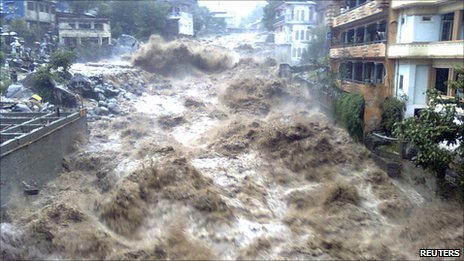
The recent catastrophe in northern Pakistan has once again laid bare our vulnerability to nature’s fury , and our repeated failure to prepare. The National Disaster Management Authority (NDMA) confirms the death toll has surpassed 250, with hundreds more injured or missing, after cloudbursts and relentless rains unleashed flash floods and landslides. The hardest-hit areas include Swat, Buner, Mansehra, Bajaur, Gilgit-Baltistan, and Azad Kashmir.
Buner alone has recorded over 150 deaths. In Bajaur, tragedy deepened when a rescue helicopter crashed during relief operations. With remote valleys still cut off, the real toll may yet prove higher. Entire villages have been swept away, bridges have collapsed, and families remain stranded without food, shelter, or medical care.
Behind these statistics are stories of unbearable grief: Those who survived are mourning their devastation and the tragic deaths of their loved ones, while searching through mud and debris for their dear ones. These are not mere statistics, but our Pakistani brothers and sisters whose lives were shattered in just moments.
In this moment, politics must yield to humanity. Federal and provincial governments, opposition groups, civil society, and the private sector must unite to provide relief. Every blanket, every ration pack, every medical kit, and every rescue operation matters.
Disasters do not discriminate. Floodwaters do not pause to ask which party a victim supported before erasing their home. If we do not respond collectively, we fail not only as a state, but as a people.
Rescue teams, volunteers, and local communities are working tirelessly, yet the scale of devastation demands more. The military, NDMA, provincial authorities, police, and local administrations must coordinate seamlessly to reach cut-off areas where roads have collapsed and communication lines are gone. The media, too, must highlight the crisis responsibly , not for sensational headlines, but to sustain awareness and mobilize help.
But relief alone is not enough. When the waters recede, we must confront a bitter truth: this is not the first time, and unless we change, it will not be the last. Each monsoon season, lives are lost, families displaced, and billions of rupees in economic damage inflicted.
The causes are clear , and man-made. Deforestation has stripped natural protections against erosion and landslides. Illegal construction along rivers and floodplains has narrowed waterways and blocked drainage. Harmless streams have become deadly torrents because we built in their paths.
Worse still, enforcement of laws has been selective. The homes of ordinary citizens are demolished, while hotels and markets owned by the powerful remain untouched. This double standard has cost lives and eroded public trust.
The way forward is clear. Illegal structures in vulnerable zones, without exception ,must be removed. Zoning laws must be strictly enforced, free from political influence. Reforestation must be pursued as a sustained national priority. The government must invest in early-warning systems, resilient infrastructure, and climate-adapted construction. These are not luxuries; they are necessities.
The international community must also recognize Pakistan’s burden. We are among the countries most affected by climate change, despite contributing little to global carbon emissions. We pay in lives and livelihoods for the emissions of others. Donor nations, humanitarian organizations, and financial institutions have a moral responsibility to help ,not only with immediate aid, but with long-term resilience.
Citizens, too, must rise to the moment. Even those far from the disaster zones can help , through donations of food, money, clothing, and medicine. Relief groups need manpower and resources. Verified appeals amplified on social media can turn empathy into action. Solidarity is not measured in words but in deeds.
The images of shattered homes, collapsed bridges, and grieving families should not fade with the news cycle. If complacency returns once the waters recede, we will condemn ourselves to repeat this nightmare year after year.
This disaster must unite us , not only in sorrow, but in resolve. Let us respond today with compassion and urgency, and begin tomorrow to build a Pakistan that stands resilient against nature’s fury , a nation prepared, humane, and just.
Our people deserve nothing less.