

- By Muhammad Ibrahim
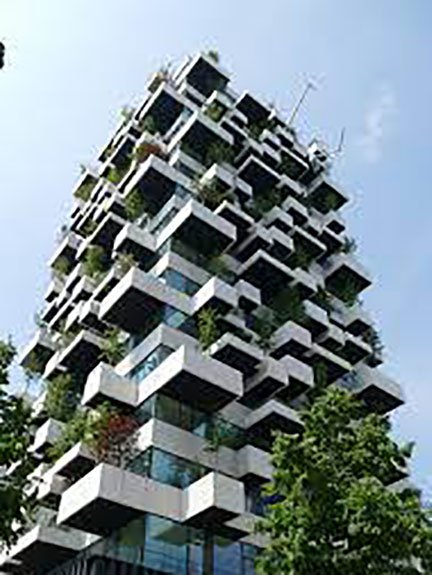
In Khyber Pakhtunkhwa, vertical development is changing the skyline from the scenic hills of Abbottabad to the busy outskirts of Peshawar. Developers claim that vertical housing is the solution to the problems of low-cost housing, transportation congestion, and land shortage. However, many residents feel that these tall buildings violate their ideal of city life. According to a middle-class resident of Peshawar,
Shehzad Khan, the apartments along the GT road are constructed in the sky, “Just concrete boxes stacked on top of each other,” “no land beneath, no green space, no space for children.” His words convey a growing sense of unease among KP’s urban dwellers regarding the critical flaws in urban planning and the conflict between vertical living and cultural preferences for courtyard homes. This resistance isn’t merely cultural; it stems from tangible shortcomings in how vertical development is unfolding. As an urban development expert, I am aware that the issue is not height but a lack of thoughtful plan
ning. The Pakistan Bureau of Statistics (2017) documents that the ratio of urban dwellers in KP has risen from 16% in 1998 to more than 19% in 2017. However, the cities lack strong regulatory mechanisms for infrastructure and land-use planning to manage this growth.
In major cities like Peshawar and Mardan, as well as other cities, high-rise buildings are thriving despite having obsolete or non-existent Development plans to guide vertical development regarding open areas, sunlight, and air circulation. There are typically not enough parks, schools, clinics, and reliable public transport. Systems for energy, water, and sanitation groan beneath the weight of recent advancements. A 2022 study by the Urban Unit Punjab revealed over 4,500 housing projects nationwide lack proper land-use approvals, with many high-density schemes in KP flouting regulations. Vertical housing developments have increased significantly in Peshawar in recent years, primarily due to urban land scarcity and population growth. The Provincial Housing Authority (PHA), Peshawar Development Authority (PDA), and private developers are constructing several apartment and high-rise projects that have been under construction or completed, frequently compromising the risks to the social and environmental life of
the residents. Peshawar residents are already protesting the encroachments and overcrowding of the streets brought on by unregulated high-rises in places, i.e., University Town and Arbab Road. The vision behind vertical development is creating compact, transit-based communities that preserve agricultural land and minimise urban sprawl, is appealing. All over the world, well-planned high-rise neighbourhoods offer walkable proximity to schools, markets, and clinics along with green areas shared by residents, rooftop gardens, and playgrounds. Singapore and Vancouver demonstrate how vertical growth can increase livability and minimise environmental pressure. Yet, in our province, most vertical projects fall short of these standards. Studies indicate that a significant proportion of Pakistan’s vertical housing lacks adequate green space per capita, ventilation, or proximity to services. Instead of people-centred urban solutions, KP’s high-rises are often real estate ventures driven by profit, not planning.
A lack of oversight and vision is the root cause. Private developers dominate the vertical push, operating with weak regulation from urban development authorities. The Peshawar Structure Plan (1986–2001) is outdated, and its successor, the Peshawar Master Plan 2047, remains in draft form and Unexecuted. There is no framework for harmonising horizontal and vertical growth in the absence of efficient master plans or guidelines for urban design. Residents are forced into unregulated flats, frequently constructed on disputed land or without maintenance plans, as a result of the public sector’s failure to provide affordable housing. Building safety codes, energy efficiency standards, and community cohesion are afterthoughts in many projects.
This unchecked growth risks long-term consequences. The World Bank’s Urban Resilience Report (2022) warns that KP’s cities face infrastructure collapse and declining quality of life if vertical and horizontal sprawl continue without reform. Residents of Swat, Kohat, and Mardan are already dealing with constrained utilities and shrinking public spaces, so these are not abstract threats. Vertical development, if poorly executed, isolates communities, creating cities in the air that feel disconnected from human needs on the ground.
To reclaim vertical housing as a sustainable urban form, we must adopt a new approach. First, all high-rise developments will have to be subject to modern urban design codes for high-rise that impose daylight, ventilation, greenery, and walkability. Second, mixed-use planning has to provide for housing close to work, schools, hospitals, and public transportation, and stimulate active neighbourhoods. Third, consultation with communities is essential; the residents need to have a say in the design and planning process. Fourth, building safety standards, energy efficiency, and infrastructure capacity are to be strictly regulated. The KP government’s moves toward revising development authorities and revising master plans are positive steps, but they need to catch up with the pace of building. If political will is directed toward implementing the Peshawar Master Plan 2047, blending human-scale urban planning with vertical expansion, it could become the tipping point for the city’s future. Inspiration can be drawn
from regional as well as global achievements. While Navi Mumbai in India is balanced between planned infrastructure and vertical growth, Singapore’s skyscraper precincts blend green spaces, good transit, and public facilities. KP cities can modify these models to fit regional requirements and financial constraints. Affordable, carefully regulated housing might be financed by public-private partnerships, and digital platforms could involve communities in planning while guaranteeing inclusivity.
Peshawar, Mardan, Swat, and other KP cities hold immense potential to grow sustainably, but “rising” without planning is a recipe for dislocation, not development. Instead of chasing height, we must pursue quality, equity, and livability. Vertical cities can thrive if they are based on human needs rather than developer profits. The strength of a city is measured not only by its skyline but also by how well it supports life on every floor and street below.