

- By Dr. Muhammad Tayyab Khan Singhanvi (Ph.D)

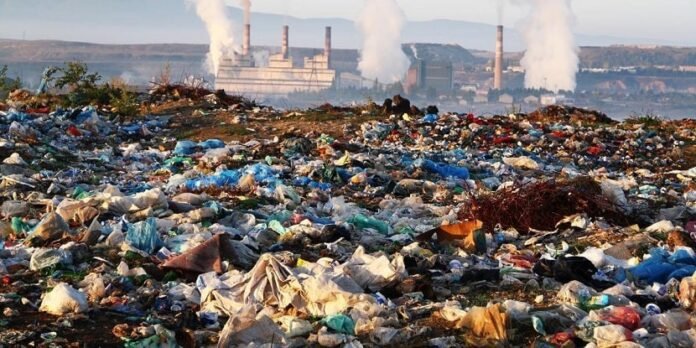
In the industrial heart of Karachi SITE Area lies the Kulsoom Bai Valika Social Security Hospital, a vital lifeline for the working class. Yet today, this institution of healing stands engulfed in a devastating environmental crisis. The dense black smoke, toxic chemicals, carbon particles, ash, and other hazardous pollutants released from the chimneys of hundreds of surrounding factories have so thoroughly infiltrated the atmosphere that human breath, eyes, skin, clothing, and even the walls and floors of the hospital are daily victims of contamination.
A relentless layer of soot coats the hospital building its windows, doors, emergency rooms, medical wards, and residential quarters all of which require constant and strenuous cleaning by the administrative staff. This alarming condition is a loud and painful testament to our environmental negligence and the incompetence of the responsible authorities.
What we witness is not a temporary inconvenience but an ongoing ecological terrorism, posing an immediate threat not only to patients but also to doctors, nurses, attendants, and all staff members. Scientific and medical institutions have long established that industrial air pollution causes a wide range of severe health issues, including asthma, bronchitis, lung cancer, cardiovascular disease, eye irritation, dermatological conditions, and cognitive decline. According to the World Health Organization, at least seven million people die prematurely each year due to air pollution, with industrial zones like SITE among the highest-risk areas.
This situation represents a blatant violation of global standards of public health and environmental protection and is equally deplorable from an Islamic and ethical perspective. Islam regards cleanliness as half of faith and upholds the sanctity of human life as a supreme act of worship. The Quran, in Surah Al-Baqarah, clearly instructs: “Do not throw yourselves into destruction with your own hands.” Yet, criminal negligence by relevant departments, industrialists, and environmental agencies has turned this healing sanctuary into a toxic chamber.
Legally, Pakistan possesses environmental protection laws, notably the Pakistan Environmental Protection Act of 1997 and the Sindh Environmental Protection Act of 2014. These prohibit the operation of any factory without air filtration or waste-gas control systems. Hence, the current scenario demands urgent and decisive action by the Sindh Environmental Protection Agency (SEPA). The hospital is not just a contaminated building it houses human beings suffering daily from respiratory issues, cough, eye inflammation, and skin irritations.
The situation has reached a point where clothes worn in the morning turn black with soot by evening. Patients seeking cure are now at greater risk of acquiring new ailments. Entering the hospital increasingly requires not just prescriptions but masks, goggles, air filters, and protective medication. The question now looms: When will we wake up? When will this toxic shadow be declared an environmental emergency? When will we finally value human life above economic gain?
Although the outlook is grim, the crisis is not insurmountable provided we adopt a collective consciousness, immediate action, and long-term planning. The first essential step is for SEPA to conduct an impartial and urgent environmental audit of all factories in the SITE area. Any factory operating without emission controls, filtration systems, or chemical neutralization mechanisms must be immediately shut down. Severe legal action and hefty fines must be imposed on violators to set an example.
The Departments of Industry and Environment must be made accountable for ensuring that all factories new or existing undergo rigorous Environmental Impact Assessments (EIA), with strict enforcement. Moreover, automated Air Quality Index (AQI) systems should be installed throughout industrial zones to provide real-time data and issue red alerts when pollution levels become hazardous.
Relevant agencies must also initiate large-scale afforestation projects in SITE, planting air-purifying trees like neem, banyan, gul mohar, acacia, and pipal that can absorb toxic gases and particulates.
We urge the judiciary and legal community to take suo moto notice or file writ petitions, reminding institutions of their constitutional responsibilities. Environmental crimes should be classified as cognizable offenses under the criminal code, enabling swift and punitive action.
Media outlets and social activists bear a moral and human responsibility to highlight this catastrophic issue. They must become the voice of the voiceless, using public pressure to fuel a movement for environmental reform. Every major TV channel, newspaper, YouTube platform, and Twitter/Facebook user should raise awareness of this silent crisis.
International organizations like the WHO and UNEP must be engaged to provide technical and financial assistance, enabling the implementation of global-standard environmental protection models in the SITE industrial zone and beyond. Their guidance should help frame a long-term national policy for environmental health in Pakistan.
Our education sector and curriculum development boards must include this issue in science and social studies syllabi, instilling environmental awareness in future generations.
Civil society, medical associations, environmental experts, lawyers, engineers, and local representatives should form a joint Environmental Monitoring Committee to serve as a bridge between government, industry, and the public. This body must offer recommendations, ensure oversight, and publish monthly progress reports.
In conclusion, if we remain silent in the face of this collective environmental crime, tomorrow this toxic atmosphere will engulf our entire society. The environmental siege of the Kulsoom Bai Valika Social Security (SITE) Hospital is not merely the tragedy of one institution it is an indictment of national apathy, industrial greed, and the institutional failure of our representatives and regulators. If we fail to implement a serious, comprehensive, and strategic response today, we may find ourselves tomorrow not only gasping for oxygen but requiring machines to keep our conscience alive.