

- Ibn-e-Taha
- Khan_adnan040@yahoo.com
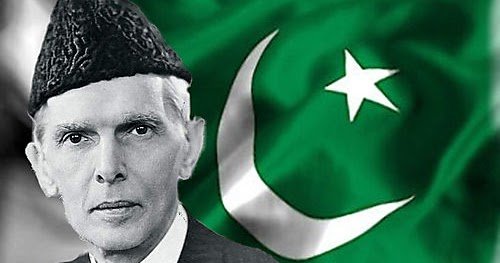
“Two-Nation Theory” and the idea of a Muslim Pakistan envisioned by Jinnah and Iqbal have become obsolete, much like the UN resolutions passed in favor of Kashmiris in 1948, my lawyer friend remarked sarcastically.
He explained that a nation is a group of people living together with similar characteristics such as language, dress, history, social codes, ethics, and ethnicity. A state, on the other hand, is a political entity with defined boundaries, a government, and a flag. In today’s global village, known nations include Germans, French, English, Dutch, Danish, Swiss, Finnish, Polish, Australians, Russians, and citizens of the US, Iceland, etc. These are all different nations without a religious identity, he continued. Unfortunately, the concept of an “Ummah” (as perceived in Pakistan) is not popular in other Muslim countries. They are identified as Arabs and Ajamis, the latter further divided into African Muslims, Asian Muslims, Far Eastern Muslims, European Muslims, Canadian Muslims, US Muslims, Indian Muslims, Bangladeshis, Malaysians, Indonesians, and Australian Muslims. One could say that Jinnah and Iqbal’s “Two-Nation Theory” needs to be redefined.
“But why do the Jews consider themselves one nation despite living in different parts of the world?” I asked inquisitively.
“You may be right to some extent,” he replied, “but there are divisions among Jews too.” To strengthen his argument, he quoted references from the Bible, history, sociologists, anthropologists, and Western researchers.
His key points included the fact that Jinnah declared Israel an illegal state, yet today, the Government of Pakistan supports the “Two-State Solution,” which means the State of Israel has been accepted in principle — effectively rewriting Jinnah’s stance.
After the Abraham Accords and the establishment of diplomatic ties between Israel and several Muslim countries, the ideology of a single Muslim nation has been restructured. He argued that the Gaza crisis could have been avoided if neighboring Muslim countries had kept their borders open and provided humanitarian aid. Muslims have no representation as superpowers in the UN, and the OIC (meant to depict a united Muslim front) has repeatedly failed to stop the genocide in Gaza.
Imagine! East Timor and South Sudan (non-Muslim territories) were granted independence almost immediately, but Gaza must be annihilated and depopulated for “world peace” because the “Two-Nation Theory” is inactive today. Students of history may note that only Indian Muslims, under the influence of the “Two-Nation Theory,” opposed the breakup of the Turkish Empire during World War I. But did the theory stop Turkey from fragmenting into many smaller states?
His argument then shifted to the creation of Pakistan under the “Two-Nation Theory.” He pointed to the separation of East Pakistan, quoting Indira Gandhi’s proud statement in her parliament:
“Today we have sunk the Two-Nation Theory in the Bay of Bengal.”
Rightly so, he argued — how could a country with two wings 1,600 miles apart survive on mere slogans? We exploited Bengalis, denied them due rights in civil and military service, kept them underdeveloped, and declared them traitors. Even today, similar attitudes persist toward smaller provinces.
His tirade, filled with rhetoric reminiscent of courtroom arguments, ignored the fact that 14 August 1947 was not a “division,” but the independence of two states. It would have been a “division” if Bharat had split into two states — but India was never a united Hindu state before British rule in 1857. Unaware of history, he did not know that the “Two-Nation Theory” had roots in the Hindutva ideology carved out on 24 September 1925. Hindutva was implemented by creating a weakened (“moth-eaten”) Pakistan through the policies of United India’s rulers.
Few Pakistanis are told that it was the Governor-General of India who took the Kashmir issue to the UN in 1947 — after Pakistani forces had reached Srinagar. And which nationality refused Quaid-e-Azam’s order to send forces to Kashmir? Even today, delegates of superpowers attend political gatherings and criticize Pakistan without regard for diplomatic norms.
There are also examples in the world where separate territories are part of the same country.
Bias against the “Two-Nation Theory” was evident when Narendra Modi openly admitted in a speech at the Bangladesh Parliament on 23 December 2015:
- “I am the stalwart who managed the disintegration of Muslim Pakistan in 1971.”
He repeated on India’s Republic Day parade on 26 January 2018:
- “We have to support Balochistan and the people of Gilgit-Baltistan in getting independence from Pakistan.”
In Bangladesh, anti-Pakistan propaganda against the “Two-Nation Theory” was strengthened by Hindu leaders such as Dhirendranath Datta, who first raised the language controversy in the Constituent Assembly at Karachi on 23 February 1948.
Regarding the Agartala Conspiracy, Bangladesh’s Deputy Speaker Shawkat Ali admitted on 23 February 2011, on the floor of parliament, that the charges against them were true — they had indeed visited Agartala to seek Indian support against the “Two-Nation Theory.”
During the Bhola cyclone of 12 November 1970, President Yahya Khan cut short his visit to China, returned to East Pakistan, and ordered full relief efforts, allocating $116 million. However, India did not allow relief flights over its territory.
India, through the Awami League, fueled perceptions of exploitation to discredit the “Two-Nation Theory” and criticize the “One Unit” policy — which, ironically, had been introduced by a Bengali Prime Minister of Pakistan, Mohammad Ali Bogra. Despite claims of exploitation, Bengalis held top positions: Khawaja Nazimuddin as Governor-General and Prime Minister, A.K. Fazlul Haq as Advocate General, Chief Minister of Bengal, Home Minister of Pakistan, and Governor of East Pakistan; Hussain Shaheed Suhrawardy as Prime Minister; and Nurul Amin as Vice President.
On 14 August 1947, East Pakistan had only one Muslim ICS officer, Nur-un-Nabi Chowdhury, and fewer than 10 Bengali officers in the armed forces.
On 26 March 1971, Indira Gandhi urged the Indian parliament to grant refugee status to Bengalis entering India from East Pakistan, invoking the “Responsibility to Protect” doctrine to justify supporting insurgents. India also provided them military training.
Wikipedia records show that it was India, not Pakistan, that started the formal military war by invading East Pakistan on 28 October 1971 at Dhalai. Despite all the criticism, the creation of Bangladesh still proves the validity of the “Two-Nation Theory.”
Problems exist in every state, but nowhere do citizens, media, or opposition call upon the international community to intervene. Yet the global media will magnify Pakistan’s minor incidents while ignoring Muslim massacres and Israel’s genocide in Palestine.
In Pakistan, media priorities have further diminished the “Two-Nation Theory.” Even the birth and death anniversaries of Iqbal and Jinnah are not headline news. Their quotes get minimal coverage, and Quaid-e-Azam’s “Unity, Faith, and Discipline” has been reduced to the name of a monument in Karachi (“Teen Talwar”). Iqbal’s poetry is often reduced to political slogans.
This does not mean the “Two-Nation Theory” has failed. Ask prominent Muslims in India today — many must either marry a Hindu or constantly speak against Pakistan to prove their loyalty.
As an independent Muslim state, Pakistan has notable achievements: representation at NASA, the World Bank, and the UN; NADRA’s world-class database; digitization of government offices; oil and gas exploration; a thriving sports goods and textile industry; production of electronics; agricultural advancements; dam construction; international charities like the Edhi Foundation; and even Nobel Prize recipients.
We, the heirs of the “Two-Nation Theory,” are rich in diverse foods, clothing, languages, music, art, culture, traditions, history, geography, and climate. We have a proud heritage and must believe in ourselves to succeed. We have a bright future if we remain united, as Quaid-e-Azam taught us. Though these are testing times, we can overcome them by holding fast to our ideology and integrity.
Had Master Tara Singh agreed with Quaid-e-Azam, he might have presented a “Three-Nation Theory” — including Sikhs as the third nation.
Today, Jinnah’s vision of the “Two-Nation Theory” is ironically endorsed worldwide when people advocate the “Two-State Solution” for Israel and Palestine.