

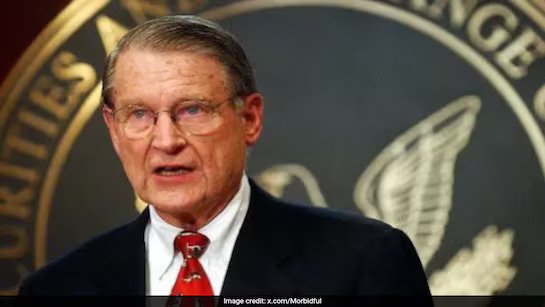
Washington (Agencies) 10 August 2025 — William H. Webster, the only American to have served as director of both the Federal Bureau of Investigation and the Central Intelligence Agency, passed away on Friday at the age of 101, his family confirmed. A towering figure in U.S. national security and law enforcement, Webster’s career spanned more than six decades and included pivotal roles during some of the most turbulent chapters in American intelligence history.
Born on 6 March 1924 in St. Louis, Missouri, Webster served as a U.S. Navy lieutenant in both World War II and the Korean War before earning a law degree from Washington University in 1949. He went on to serve as a federal prosecutor and later as a U.S. district judge, gaining a reputation for integrity and legal acumen.
Webster was appointed FBI Director in 1978 by President Jimmy Carter, taking the helm at a time when the bureau was reeling from scandals involving warrantless surveillance and illegal break-ins. Just six weeks into his tenure, a federal grand jury indicted several former FBI officials for unauthorized raids targeting associates of far-left fugitives. Webster’s leadership helped restore public trust in the agency, emphasizing accountability and legal oversight.
In 1987, President Ronald Reagan appointed Webster to lead the CIA, where he served until 1991 under both Reagan and President George H. W. Bush. His tenure at Langley was marked by efforts to stabilize the agency in the aftermath of the Iran-Contra affair—a covert operation that involved illegal arms sales to Iran and the diversion of funds to Nicaraguan rebels. Webster guided the CIA through internal reforms and public scrutiny, though his time there was not without controversy.
Critics faulted Webster for failing to detect Soviet mole Aldrich Ames, whose espionage activities compromised numerous CIA operations. Others questioned his intelligence assessments during the Gulf War and the collapse of the Soviet Union, citing a lack of foreign policy experience. Nonetheless, he remained a respected figure in Washington, known for his principled stance on ethical leadership. “CIA and FBI directors should be ready to resign if asked to do something they know is wrong,” he once said.
After retiring in 1991, Webster continued to serve the public, advising on homeland security and receiving the Presidential Medal of Freedom for his contributions. In 2002, he briefly chaired a board overseeing accounting practices but resigned before its first meeting amid controversy over ties to a company accused of fraud.
His family described him as a beloved husband, father, grandfather, great-grandfather, and patriot. The FBI paid tribute to Webster as a “dedicated public servant” and said it would be “forever grateful” for his legacy.
Webster’s passing marks the end of an era in American intelligence history, leaving behind a legacy of service, reform, and unwavering commitment to the rule of law.