

- By: Ibn-e-Taha
- Khan_adnan040@yahoo.com
Pakistan Air Force (PAF) has stood as a formidable deterrent against aggression, fulfilling the vision of Quaid-e-Azam Muhammad Ali Jinnah, who was aware of importance of air power in a country’s defence. He expressed complete confidence in the British officers and he continued with British leadership by endorsing Air Vice Marshal Perry Keene as Commander-in-Chief. Initially named the Royal Pakistan Air Force (RPAF) on 15 August 1947, word “Royal” was inherited from its predecessor, the Royal Indian Air Force, which was divided between India and Pakistan based on an agreed proportion.
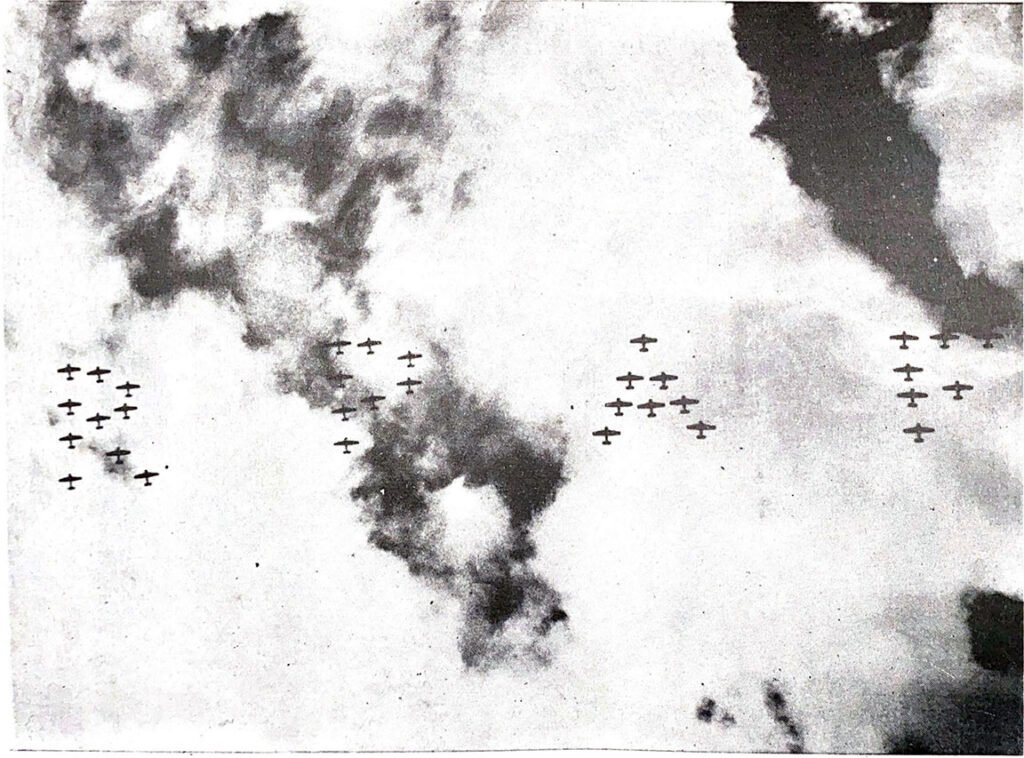
Letters “RPAF” displayed by its’ pilots in skies of Pakistan
The first four Commanders-in-Chief (C-in-C) of RPAF were British origin, who had witnessed the “Battle of Britain”. They embodied professionalism, commitment, integrity, dedication and self-respect amongst the RPAF personnel. They established a proud legacy to enhance PAF’s capabilities through personal example, realistic training, and innovative strategies to meet evolving threats. Today, the PAF stands as a testament to their vision—a symbol of national pride in modern aerial warfare and strategic operations.
To establish a new air force in Pakistan, following challenges were faced by these British commanders:
A. Indian Air Force (IAF) was nearly three and a half times larger than RPAF.
B. RPAF lacked radar coverage.
C. RPAF was insufficiently equipped to fight even in a defensive role.
D. RPAF was too small to effectively target economic or strategic installations in India (Bharat).
E. It could not afford to fight a prolonged war due to a severe shortage of personnel (220 officers and 2,112 airmen).
F. It lacked the proper infrastructure and standing orders required to run an air force efficiently.
Despite these severe limitations, British commanders did their utmost to cope with the deficiencies and develop RPAF into a reliable force. Having experienced border skirmishes during the 1947–48 conflict with India, they clearly perceived the existential threats facing Pakistan and proactively implemented measures to address them. These efforts included enhancing deterrence capabilities, boosting operational readiness, and providing support to civil authorities—foundations that continue to guide PAF operations today. These founder British commanders focussed on rigorous standards of selection, training, grooming, career progression, and merit-based promotions. They prepared the PAF to meet the challenges ahead hrough elite selection, tough training, and strategic innovation. British officers continued until July 1957, when the Royal Pakistan Air Force (RPAF) gained enough strength to appoint its first Pakistani Commander-in-Chief Asghar Khan.
A brief profile of these four British commanders is as follows.
- Air Vice Marshal Allan Perry-Keene (15 Aug, 1947 – 17 Feb, 1949)
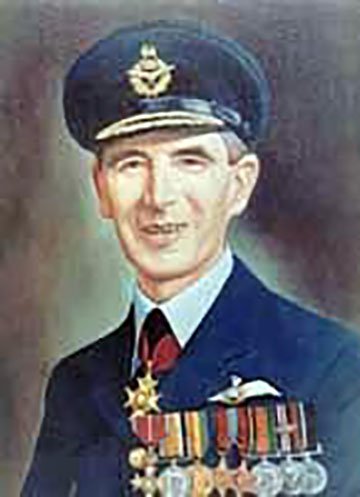
Air Vice Marshal Allan Perry-Keene was a dedicated and visionary commander who worked enthusiastically to develop the Royal Pakistan Air Force (RPAF) into a formidable fighting force. Amongst his challenges was retrieving Pakistani aircrew and ferry the Tiger Moths allocated to the RPAF. Due to shortage of officers, AVM Perry-Keene placed his trust in officer cadets and sent them to India to ferry these aircraft to Pakistan.
He had initially expected that Pakistani cadets, who had opted for Pakistan but were still under training at Indian institutions, would be allowed to complete their courses there. However, they were expelled. In response, he arranged for the training of RPAF pilots in both England and at Risalpur. Pakistani pilots soon proved their mettle. In 1949, Flight Lieutenant Fauad Shahid Hussain secured first position in the Pilot Attack Instructor Course at the Central Gunnery School, Leconfield. He also set a Commonwealth record in air-to-air gunnery.
Perry keene raised two new flying squadrons and introduced both the Halifax bomber and the Bristol Freighter cargo aircraft into the RPAF fleet. Being a persistent commander, he was always preoccupied with the establishment and development of the fledgling RPAF. Under his command, the RPAF conducted its first Independence Day flypast on 16 August 1947 in Karachi, when Quaid-e-Azam officially assumed the role of Supreme Commander of the Pakistan Armed Forces. Four Tempest aircraft participated in this historic display.
During his tenure, Quaid-e-Azam visited the Flying School at Risalpur and elevated it to the status of a college on 13 April 1948. The same year, under his leadership, the RPAF organized its’ first public air display in Lahore.
During the 1948 Kashmir conflict, the RPAF’s role was limited to air-dropping supplies for army troops stranded in the valley. To counter enemy artillery in the region, AVM Perry-Keene tasked Wing Commander Asghar Khan (later Commander-in-Chief of PAF) to airlift a mortar from Rawalpindi to Gilgit. However, due to the mortar’s unusual large size, it could not fit entirely into the Harvard aircraft, and the cockpit had to remain open. In a remarkable act of courage and ingenuity, Asghar Khan, took off with an open cockpit and successfully landed the aircraft on an improvised grassy strip in Gilgit.
During one of the Kashmir supply drop missions on 4 November 1948, Indian Tempest aircraft attacked a Pakistani Dakota cargo plane piloted by Flight Lieutenant Mukhtar Dogar. The Indian pilots contacted him via radio and ordered him to land at the nearest Indian airbase. Dogar and his crew refused to surrender, even as they came under heavy fire. Despite being wounded, the crew managed to land the aircraft safely back in Pakistan. Recognizing this act of exceptional bravery, Perry-Keene ensured that Dogar was awarded the first wartime gallantry award of Sitara-e-Jurat in the history of the RPAF.
It is to the credit of Perry-Keene that famous cricketers were inducted in RPAF. They included Imtiaz Ahmed, Waqar Hassan, Mehmood Hussain and Abdul Hafeez Kardar. Abother cricketer, MEZ Ghazali was already in uniform in RPAF.
- Air Vice Marshal Sir Richard Atcherley (18 Feb, 1949 – 06 May, 1951
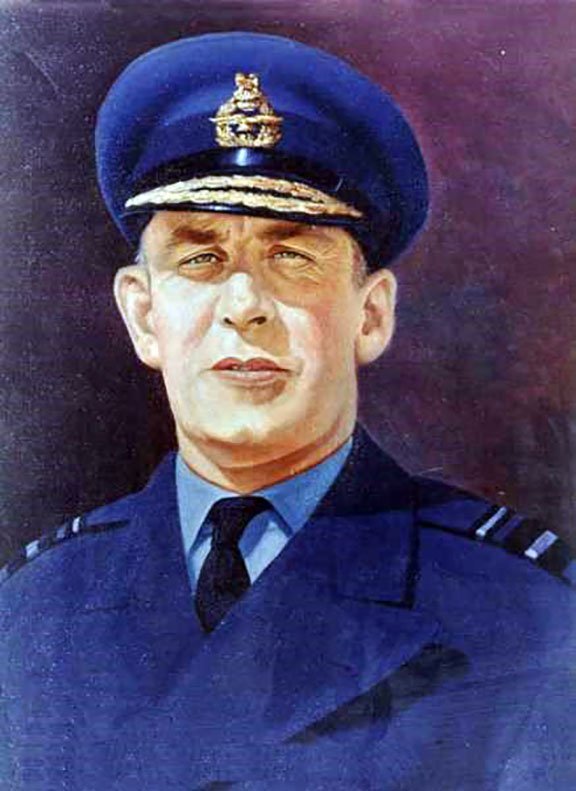
Air Vice Marshal Sir Richard Atcherley was a striking personality who ensured strict adherence to rules and procedures in his persistent efforts to establish RPAF. A popular veteran fighter pilot, he was known for his wit and earned widespread respect for setting and maintaining high standards of flying.
In 1949, the Government of Pakistan decided that military parades and other official functions would be held annually in Karachi. A total of twenty-one aircraft were earmarked from the PAF Academy Risalpur to fly to Karachi. Due to a shortage of officers, even a student Acting Pilot Officer was included in the contingent.
Owing to his deep affection for the Royal Pakistan Air Force (RPAF), the Wali of Swat Valley donated an amount equivalent to the cost of a “Fury” aircraft on 9 July 1949. In recognition of this generous gesture, the aircraft was painted in silver livery with the name of Crown Prince Jehanzeb inscribed on it. The aircraft was formally handed over to AVM Atcherley in a ceremony attended by Begum Rana Liaquat Ali Khan.
Atcherley also organized several air shows in various cities and kept the RPAF active on the operational front by holding live firepower demonstrations. On 26 February 1950, an air display held in Lahore mesmerized the audience. A total of 60 aircraft showcased the skills of Pakistani pilots. Notably, six Fury and six Attacker aircraft performed rocket attacks on a fort, demonstrating precision and expertise.
Another aerial display was arranged during the visit of the Shahanshah of Iran to PAF College Risalpur in March 1950. The performance included precision bombing, low-level aerobatics, and tight formations by various aircraft types—providing a visual spectacle. Reza Shah Pahlavi, himself a trained pilot, personally appreciated the aerobatic skills of the RPAF pilots.
On 15 August 1950, another air display was held at Drigh Road (PAF Base Faisal), where Flight Lieutenant Mikulski and Flight Sergeant Hussain performed breathtaking aerobatics. FS Hussain, flying a Fury aircraft, dived at 450 MPH, executed a roll, and then climbed upside down—a spectacular feat.
Atcherley introduced several significant aircraft into RPAF service, including the Hawker Sea Fury (1950) and the Spitfire (1950). It is also to Atcherley’s credit that 35-year-old Hashim Khan, a squash and tennis marker, was sent to participate in the British Open Squash Championship. There, Hashim won the championship seven consecutive times, followed by his younger brother Azam Khan (member of RPAF) and cousin Roshan Khan (member of RPAF). Roshan was the father of the legendary Jahangir Khan, who set world records in both the British Open and the World Open Squash Championships.
Upon his retirement, AVM Atcherley was given a splendid send-off in line with RPAF traditions. A spectacular air display was held at Peshawar Air Base. The aerobatic formation, known as the “Red Dragons,” was led by Wing Commander Zafar Chaudhry (later Commander-in-Chief), who performed aerobatics in honour of the outgoing C-in-C, AVM Atcherley.
After retiring from the RPAF, Atcherley returned to England to lead a peaceful life. Before his death, he visited the PAF Air Advisor’s Office at the Pakistan High Commission in London. Following full military protocol, he stood erect in the door-way, saluted the PAF officer, and with tears rolling down his cheeks, said:
“Sir, I am here to pay my respects to the Pakistan Air Force, and salute you because you represent that fine service. (reference: “My years in blue uniform” by Atta Rabbani)
- Air Vice Marshal Leslie William Cannon (07, May 1951-19 Jun, 1955
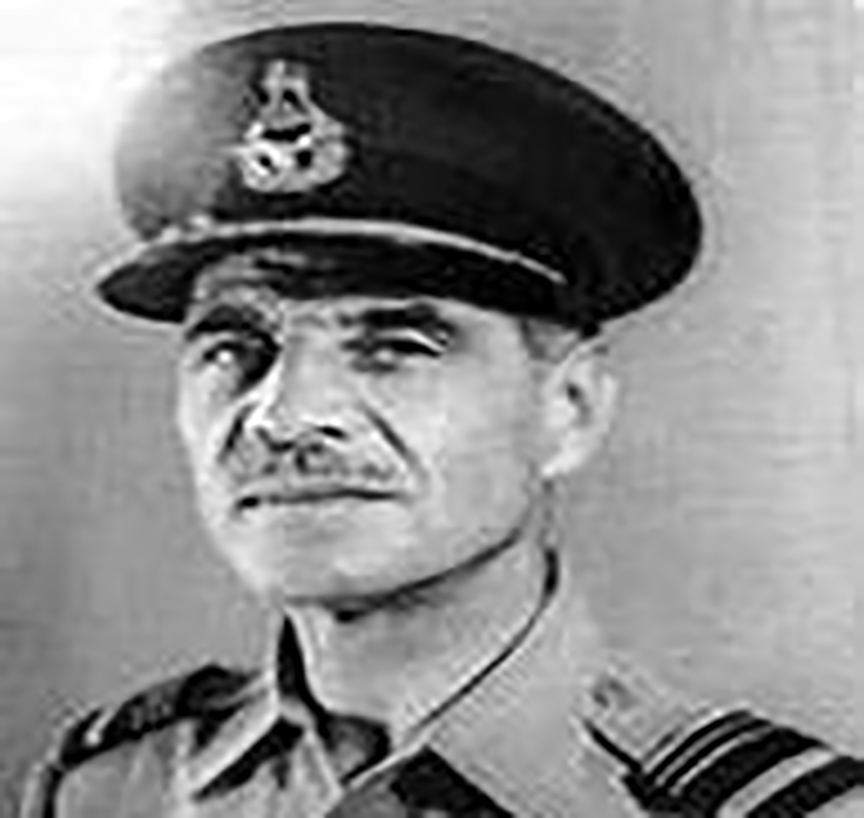
Air Vice Marshal Leslie William Cannon was enriched with Britih mannerism. AVM Cannon was also known as man of principles. He ensured flying discipline and intensive training schedules. He also ensured RPAF enters the jet age by introducing first jet aircraft “Attacker” in Jun, 1951. He formulated a future induction plan on 13 May 1952. It included the T-33 jet trainers, indicating that Pakistan was planning to train a solid cadre of jet pilots in anticipation of future requirements. On 1 March 1954, he proposed a ten-year requirements plan that envisioned 786 aircraft and 44 flying squadrons.
During his tenure, Pakistan concluded a Mutual Defence Assistance Pact (1954) with the United States. Under this program, the PAF received 102 F-86E aircraft. His leadership also coincided with severe floods, which disrupted road links and railway lines across the country. The RPAF undertook risky missions, often at the expense of personal safety. These included air drops of medicines, food, logistics and supplies, as well as VIP visits to flood-affected areas and the transportation of vital equipment. Stranded people were also safely evacuated from dangerous zones to safer locations.
To ensure a regular flow of appropriately trained personnel in RPAF, AVM Leslie established two key institutions: a Pre-Apprentice School at Lower Topa and a Pre-Cadet School at Sargodha. He distinguished himself by his even-handed settlement of contentious issues, reflecting his commitment to professionalism and long-term development of the force. AVM Leslie William distinguished himself through even handed settlement of contentious issues.
- Air Vice Marshal Sir Arthur McDonald (20 Jun, 1955 – 22 Jul, 1957)
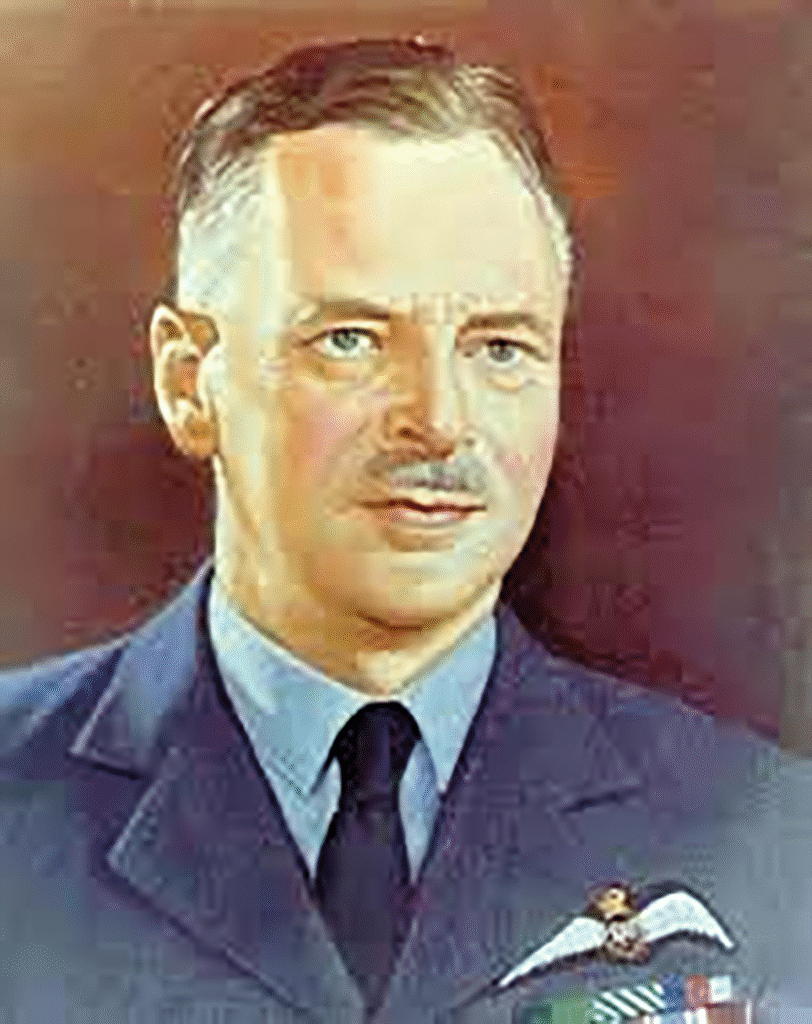
Last British Air Commander in Pakistan was Air Vice Marshal Sir Arthur McDonald. He was a highly decorated officer who had received both the CB (Companion of the Order of the Bath) and the AFC (Air Force Cross). McDonald combined exceptional technical expertise with a remarkable ability to connect with people at all levels. AVM McDonald had the honour of inducting several important aircraft into the Royal Pakistan Air Force (RPAF), including the F-86 Sabre, T-33, Viscount, and Beechcraft Twin Bonanza.
Royal Pakistan Air Force was officially renamed the Pakistan Air Force (PAF) on 23 March 1956. To commemorate the occasion, a grand air display was held at PAF Base Drigh Road on 7 March 1956. It featured an impressive firepower demonstration. Harvard aircraft formed a stunning “Crescent and Star”—the national emblem of Pakistan—in the sky.
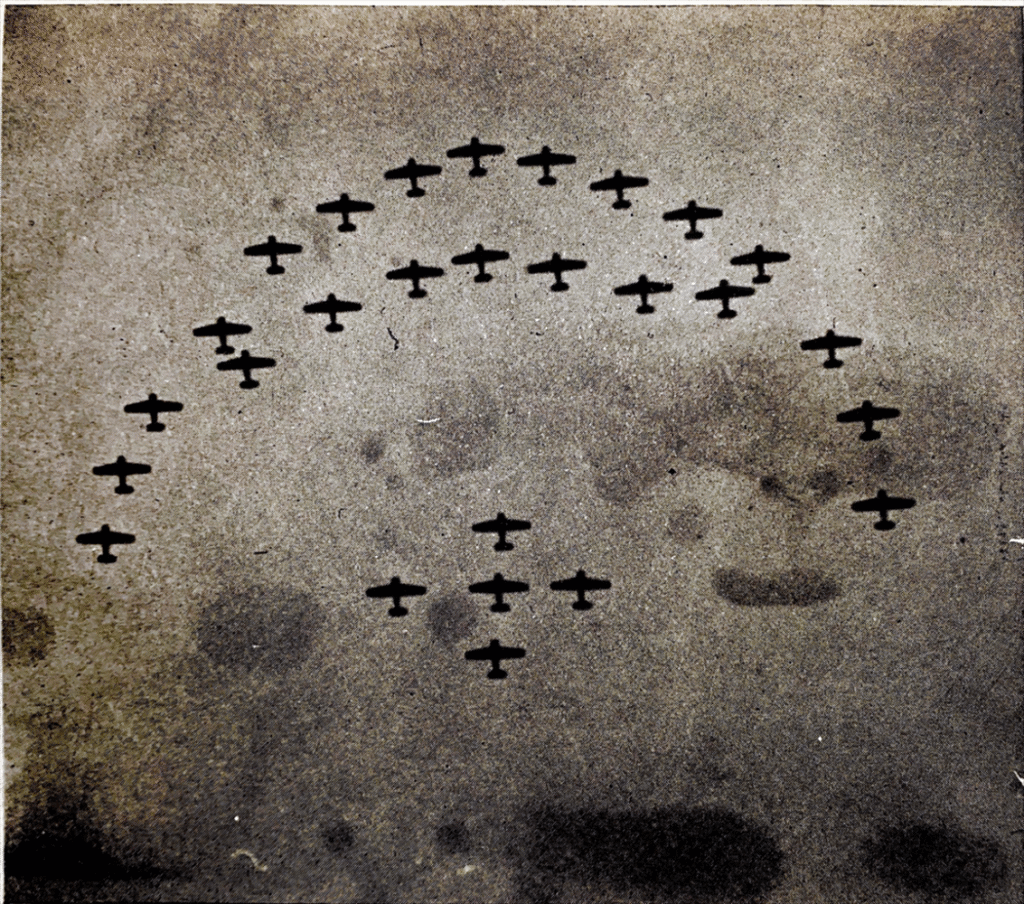
Crecent and Star of Pakistan by Harvards in air on 7 March, 1956 at Drigh road (PAF Faisal).
AVM McDonald also ensured the smooth transfer of command to the first Pakistani Commander-in-Chief, Air Marshal Asghar Khan.
- Air Chief Marshal Zaheer Ahmed Babar Sidhu (19-03-2021 till date)
Worthy Air Chief Marshal Zaheer Ahmed Babar Sidhu carries the legacy of PAF in letter and spirit. He is a highly qualified officer graduated from Command & Staff College (UK) and the Royal College of Defence Studies (UK). He had led PAF through live combat operations in both 2019 and 2025. He holds the distinct honour of the team planning the shoot-down of two Indian Air Force aircraft on 27 February 2019. Continuing that tradition, he ordered the shootdown of six enemy aircraft on 8 May 2025.
As CAS, he introduced the J-10 (4.5 generation fighter aircraft) to the PAF fleet in 2022. ACM Zaheer has also advanced PAF’s electronic warfare capabilities and a robust inventory of combat drones. He has placed a strong focus on cyber-space warfare, electronic countermeasures (ECMs), electronic counter-countermeasures (ECCMs), C4I systems, and progressive flying training and education aligned with the latest global trends.
Pakistani nation should feel free to sleep as their air force is awake.