

- Reports suggest deployment of Su-30MKI armed with BrahMos supersonic cruise missiles at Ayni Airbase
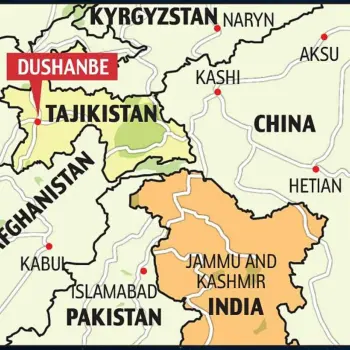
NEW DELHI (Agencies): India’s Ayni airbase in Tajikistan has emerged as a crucial strategic asset amid rising tensions with Pakistan. Following the Pahalgam attack, Prime Minister Narendra Modi has granted the Indian military full operational freedom to decide on a response. While Pakistan remains on high alert, reports suggest that India could use its Ayni airbase to conduct intelligence, reconnaissance, and even combat missions, bypassing Pakistan’s heavily defended eastern border.
The base is less than 600 km from Pakistani Kashmir and 500km from city of Peshawar, allowing India to launch operations without crossing the heavily fortified Line of Control (LoC) or International Border (IB).
India has maintained a military presence in Tajikistan for nearly 30 years, initially operating a military hospital in Farkhor to support the Northern Alliance during Afghanistan’s civil war.
The Gissar Military Aerodrome (GMA), also known as Ayni airbase, was developed with $100 million in funding from India’s Ministry of External Affairs. The airstrip was extended to 3,200 meters, making it suitable for most fixed-wing aircraft.
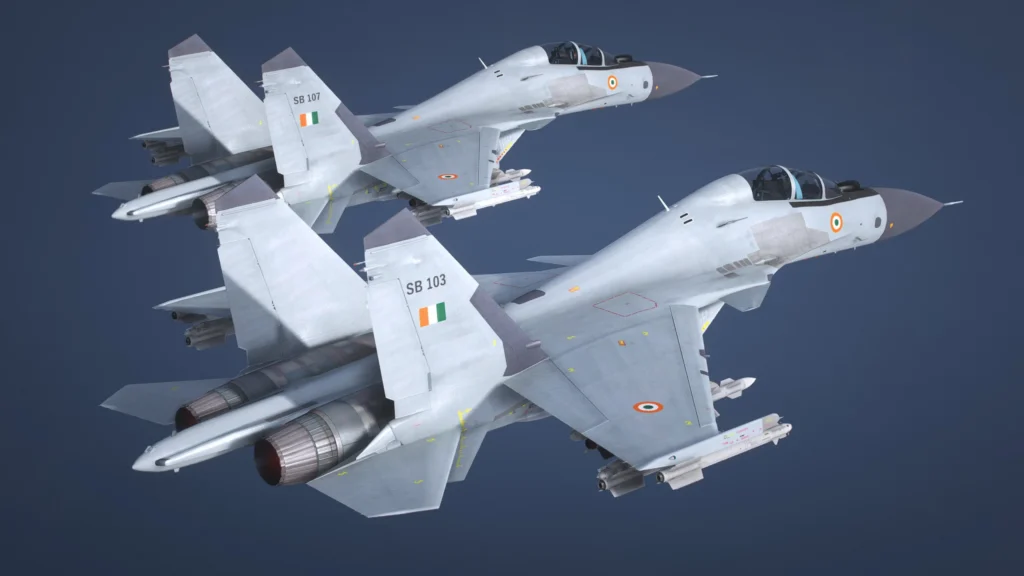
Reports indicate that India has temporarily deployed Su-30MKI fighter jets armed with BrahMos supersonic cruise missiles, at the base, further increasing its strategic reach.
The Su-30MKI, India’s premier multirole fighter aircraft, continues to play a crucial role in the Indian Air Force’s (IAF) defense strategy amid rising regional tensions. Developed jointly by Russia’s Sukhoi Design Bureau and India’s Hindustan Aeronautics Limited (HAL), the aircraft is tailored to meet India’s operational requirements.
The Su-30MKI is equipped with twin engines and thrust-vectoring nozzles, allowing it to perform advanced aerial maneuvers such as the Pugachev’s Cobra. With a maximum speed of Mach 2 (approximately 2,120 km/h) and a combat range of 3000 kilometers. s, the aircraft is designed for both air superiority and ground attack missions. The fighter jet boasts an advanced avionics suite, integrating technologies from Russia, India, Israel, and France. It is armed with BrahMos supersonic cruise missiles, air-to-air missiles, and precision-guided bombs, making it one of the most formidable aircraft in the region.
The Su-30MKI forms the backbone of the Indian Air Force’s fighter fleet, with over 260 aircraft in service. It has been deployed in various military exercises and real-world operations, showcasing its versatility in air superiority missions, strategic bombing, maritime operations, and reconnaissance.
Reports indicate that India has temporarily stationed Su-30MKI fighter jets at the Ayni airbase in Tajikistan, enhancing its strategic reach in Central Asia. This deployment allows India to conduct intelligence, surveillance, and reconnaissance (ISR) missions and potentially launch operations from a geographically advantageous position.
Indian aircraft could enter AJK from the Wakhan Corridor, a sparsely monitored region between Pakistan and southern Tajikistan. While direct strikes from Ayni airbase could be diplomatically sensitive, the presence of an Indian airbase in Tajikistan has forced the Pakistan Air Force to operationalized its Saidu Sharif Swat and Skardu air bases.